Sewing Machine Parts Defined
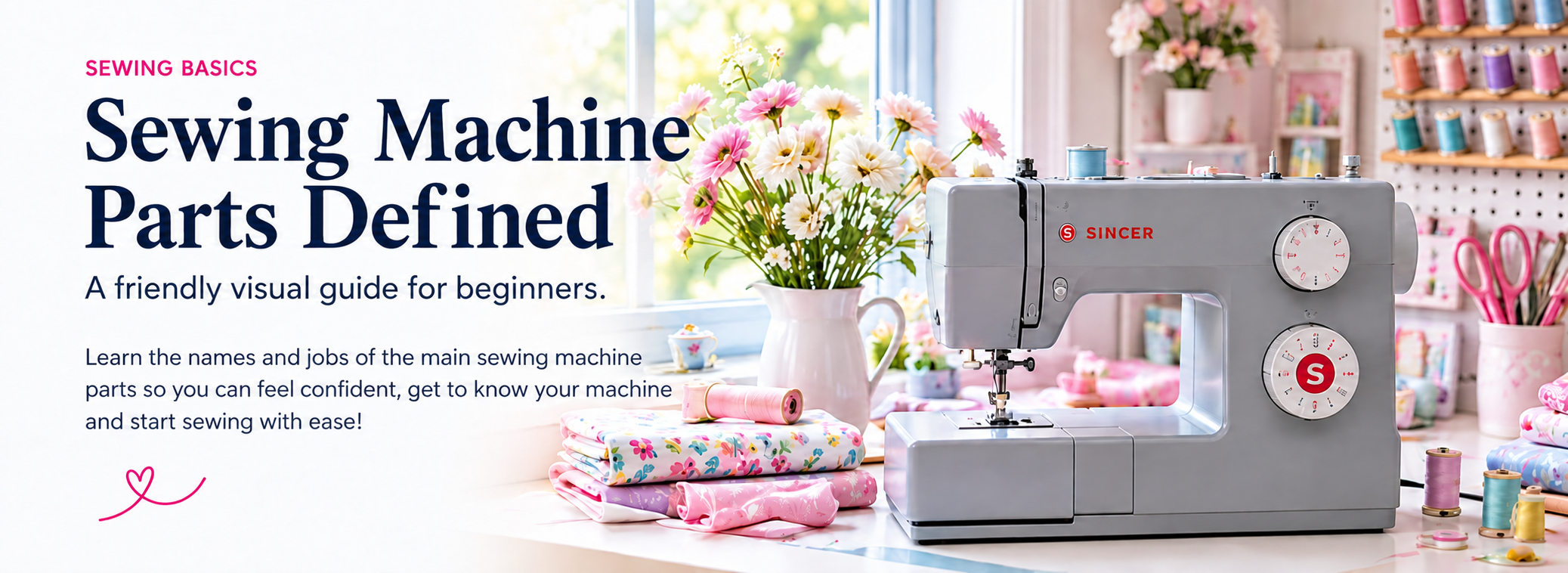
Welcome to the wonderful world of sewing machines! If you're new to sewing, the machine can seem a bit like a complicated contraption full of mysterious knobs, levers, and little metal bits. But don’t worry—soon, all these parts will feel as familiar as an old friend. Sewing machines come in different shapes and sizes, and no two models are exactly the same. However, there are some standard components that you'll find on most sewing machines. Learning what each part does will help you feel more comfortable and confident as you begin your sewing journey.
join amazon prime!Start with the Essentials
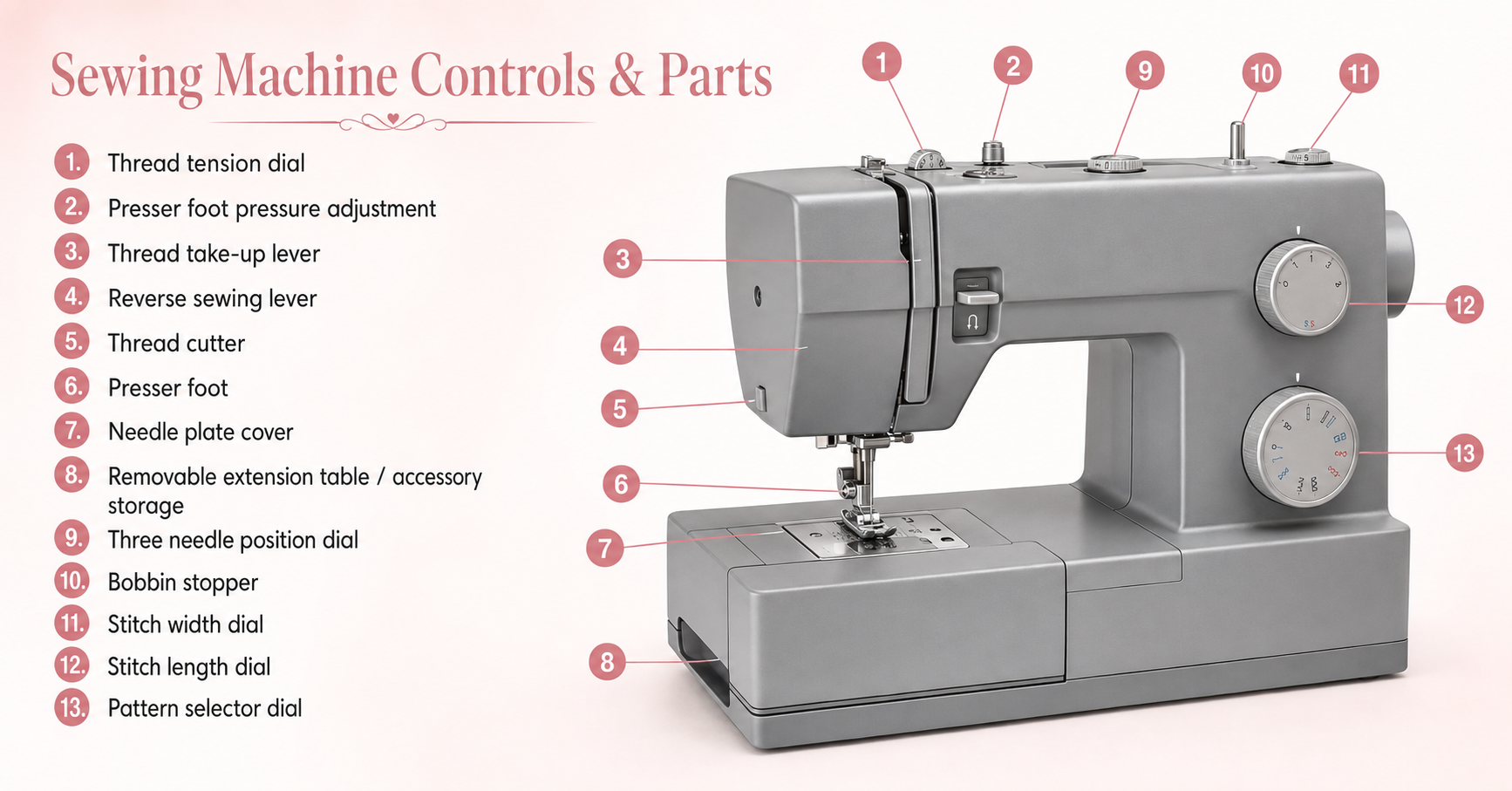
Thread tension dial
Controls how tightly the upper thread is pulled through the fabric. Proper tension helps the upper and bobbin threads meet evenly between the fabric layers.Presser foot pressure adjustment
Changes how firmly the presser foot presses against the fabric. Lighter pressure can help with delicate fabric, while heavier pressure may help feed thicker fabric evenly.Thread take-up lever
Moves up and down while sewing to feed thread to the needle and remove slack from each stitch. The upper thread must pass through it when threading the machine.Reverse sewing lever
Makes the machine sew backward. It is commonly used to secure stitches at the beginning and end of a seam.Thread cutter
A small built-in blade used to cut the upper and bobbin threads after sewing.Presser foot
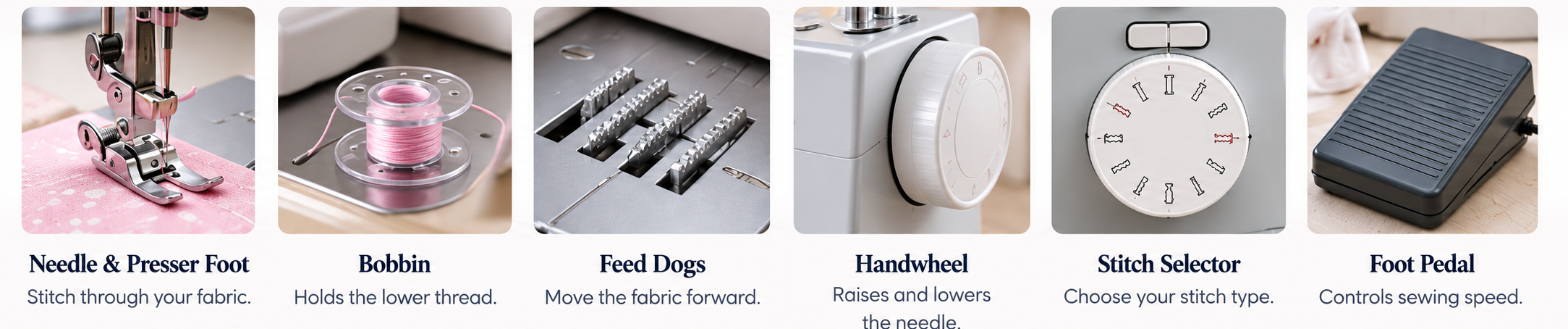
Holds the fabric against the feed dogs while you sew. Different presser feet are available for zippers, buttonholes, appliqué and other sewing techniques.Needle plate cover
Covers the bobbin area beneath the needle plate. It can be opened or removed when inserting the bobbin or cleaning the machine.Removable extension table/accessory storage
Provides a larger surface for supporting fabric. Removing it exposes the free arm, while the compartment is often used to store presser feet, bobbins and other small accessories.Three needle position dial
Moves the needle to the left, center or right. Needle position is useful for topstitching, inserting zippers and adjusting seam allowance.Bobbin stopper
Stops or disengages the bobbin-winding mechanism when the bobbin is full.Stitch width dial
Controls the width of zigzag and decorative stitches. A higher setting generally creates a wider stitch.Stitch length dial
Controls the distance between stitches. Short stitches are close together, while longer stitches are spaced farther apart.Pattern selector dial
Allows you to select a straight, zigzag, stretch, buttonhole or decorative stitch available on the machine.
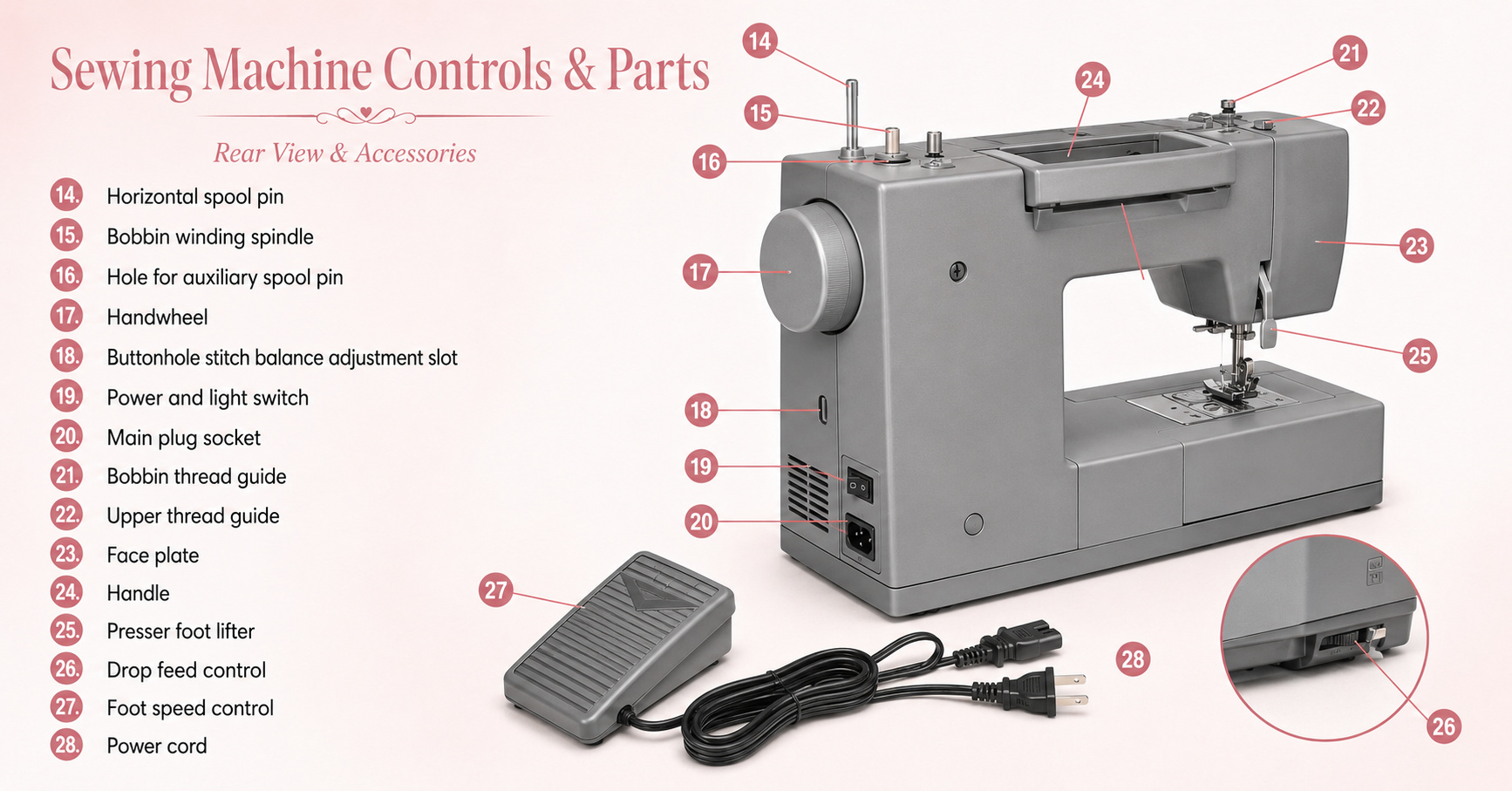
14. Horizontal spool pin
Holds the spool of upper thread horizontally while sewing. A spool cap is normally placed beside the spool to keep it secure.
15. Bobbin winding spindle
Holds the empty bobbin while thread is wound onto it. The spindle is usually moved into the winding position before the machine is started.
16. Hole for auxiliary spool pin
Holds an additional spool pin. It may be used for twin-needle sewing or for holding a second spool while winding a bobbin.
17. Handwheel
Manually raises and lowers the needle. Turn it slowly toward you when positioning the needle or bringing up the bobbin thread.
18. Buttonhole stitch balance adjustment slot
Fine-tunes the stitch density on the two sides of a buttonhole when one side looks different from the other.
19. Power and light switch
Turns the sewing machine and its built-in work light on or off.
20. Main plug socket
The connection point where the machine’s power cord or combined power-and-foot-controller cable plugs into the machine.
21. Bobbin thread guide
Directs the thread correctly from the spool to the bobbin-winding mechanism.
22. Upper thread guide
Keeps the upper thread following the correct path from the spool toward the tension system and needle.
23. Face plate
Covers internal components near the needle bar and take-up mechanism. It may be removable for cleaning or maintenance.
24. Handle
Provides a secure place to lift or carry the sewing machine. Always support the machine with your other hand when moving it.
25. Presser foot lifter
Raises and lowers the presser foot. Raise it to position or remove fabric and lower it before sewing.
26. Drop feed control
Lowers or raises the feed dogs. Lowered feed dogs are used for techniques such as free-motion quilting, embroidery and some types of darning.
27. Foot speed control
Operates the machine and controls its sewing speed. Pressing it lightly makes the machine sew slowly; applying more pressure increases the speed.
28. Power cord
Connects the sewing machine to an electrical outlet. Some machines use a single cable assembly that connects both the power supply and foot controller.

While different sewing machines may have slight variations in design and additional features, these basic parts will help you get familiar with your machine. Now, you’re ready to start threading, winding, and stitching your way to sewing success!
You May Also Like….