Sewing Machine Feet Guide
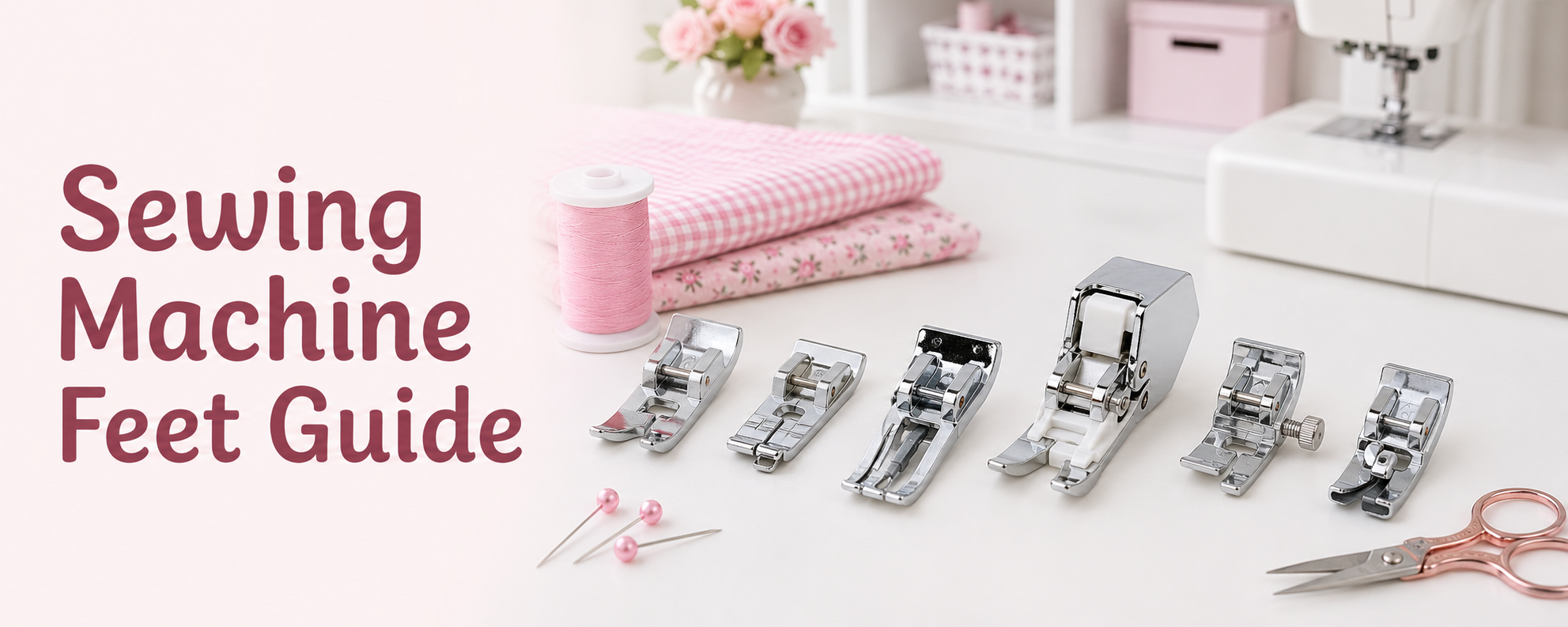
Small Feet. Big Possibilities.
The right sewing machine foot can make your sewing easier, more accurate and more enjoyable. In this guide, we’ll explore the most common presser feet, what they do, and when to use them, so you can feel confident choosing the right foot for your next project.

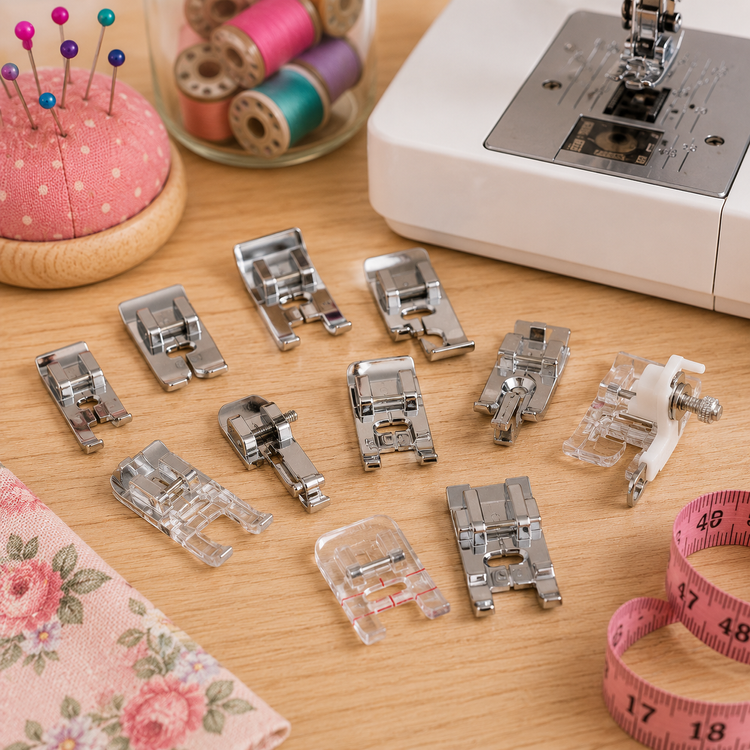
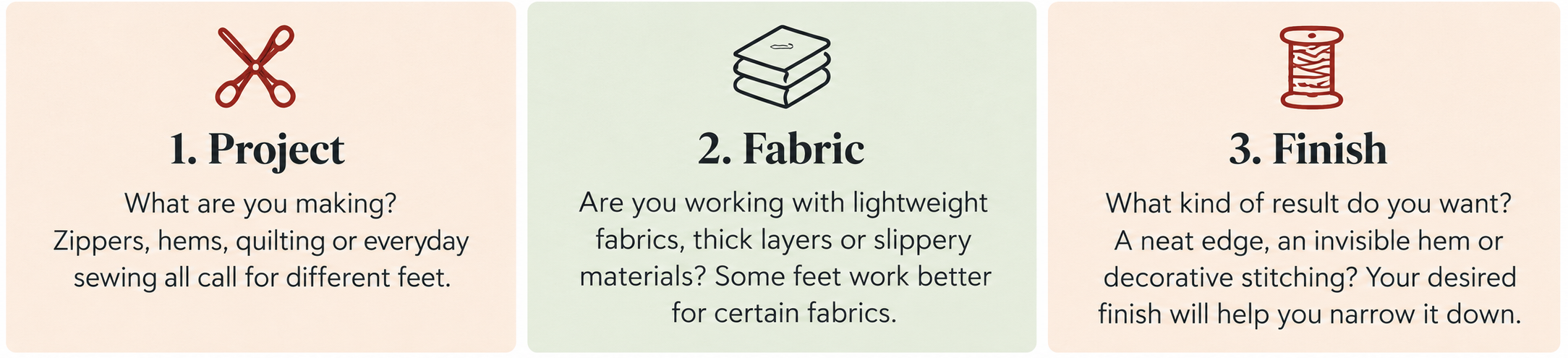
Which Foot is Right for Your Project?
Picking the right foot can be like picking the right tool for a job—sometimes you don’t know you need it until you try it!
Quilting: Use a ¼-inch foot for accurate quilt-piecing seams and a walking foot for evenly sewing the quilt top, batting, and backing together.
Finishing Touches: Use a blind-hem foot for nearly invisible hems or a rolled-hem foot for narrow, neatly folded hems.
Stretch Fabrics: A walking foot can help feed knit and stretchy fabrics evenly, reducing shifting, stretching, and puckering.
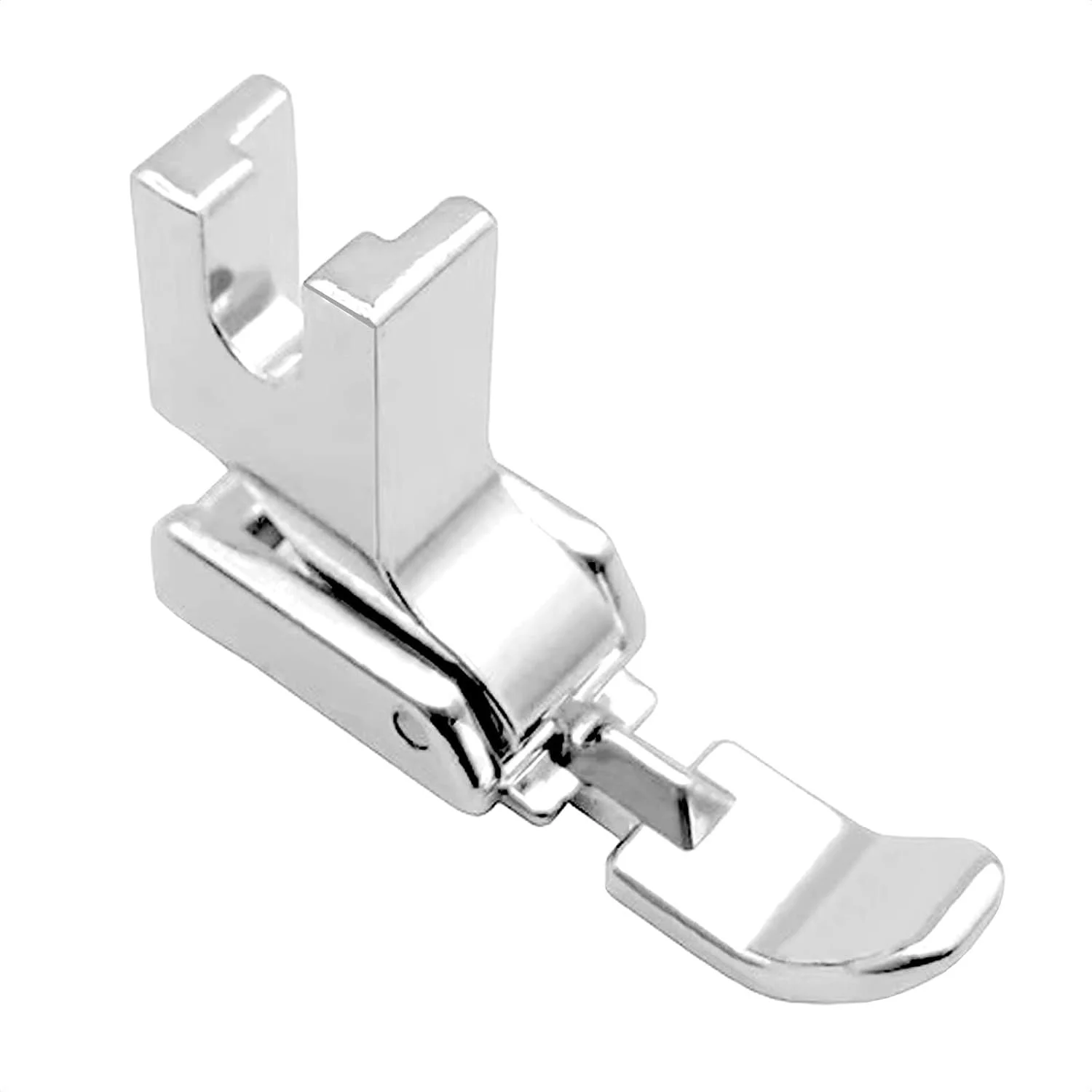
Adding Zippers: Use a zipper foot to stitch neatly and accurately close to zipper teeth, piping, and narrow edges.
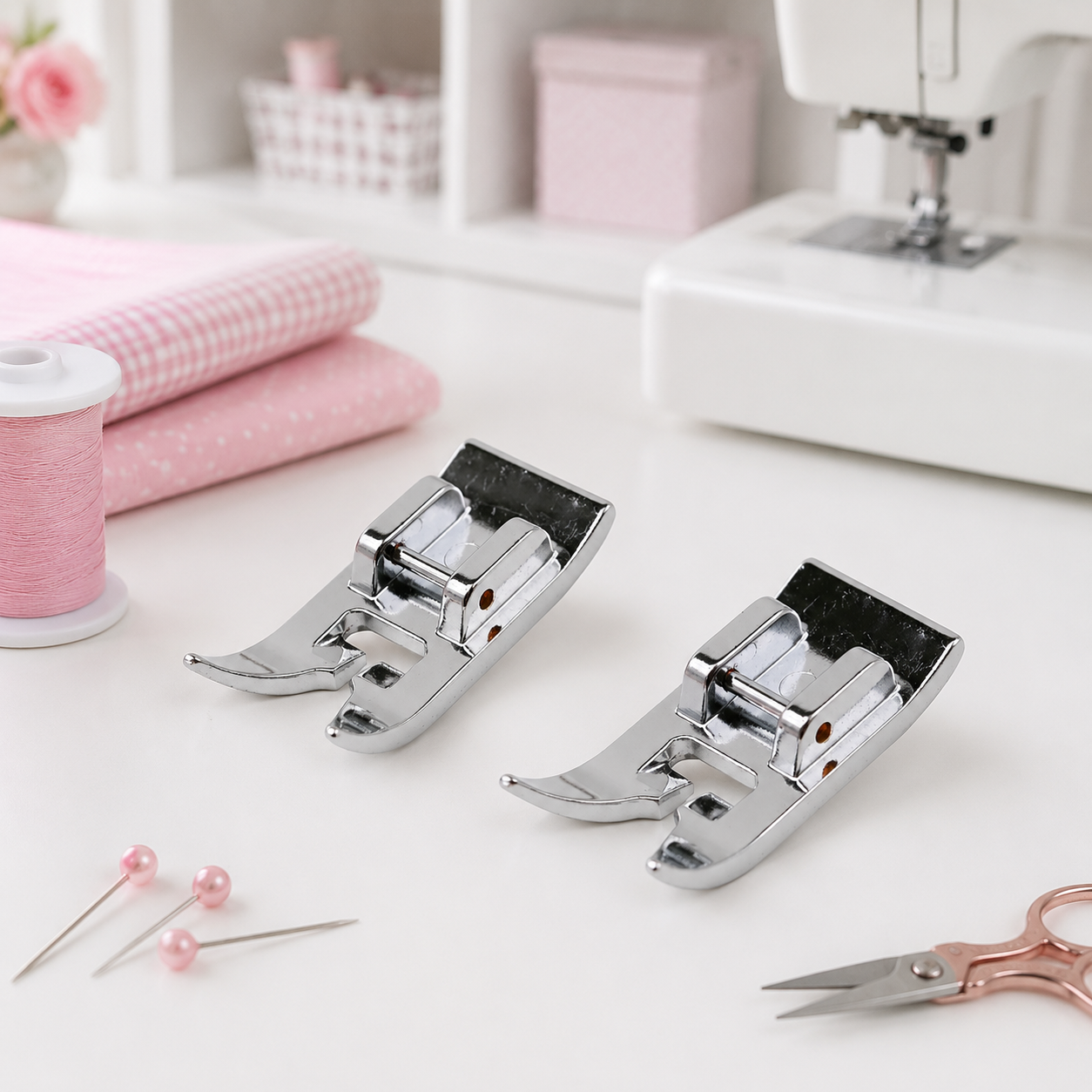
Essential Sewing Machine Feet
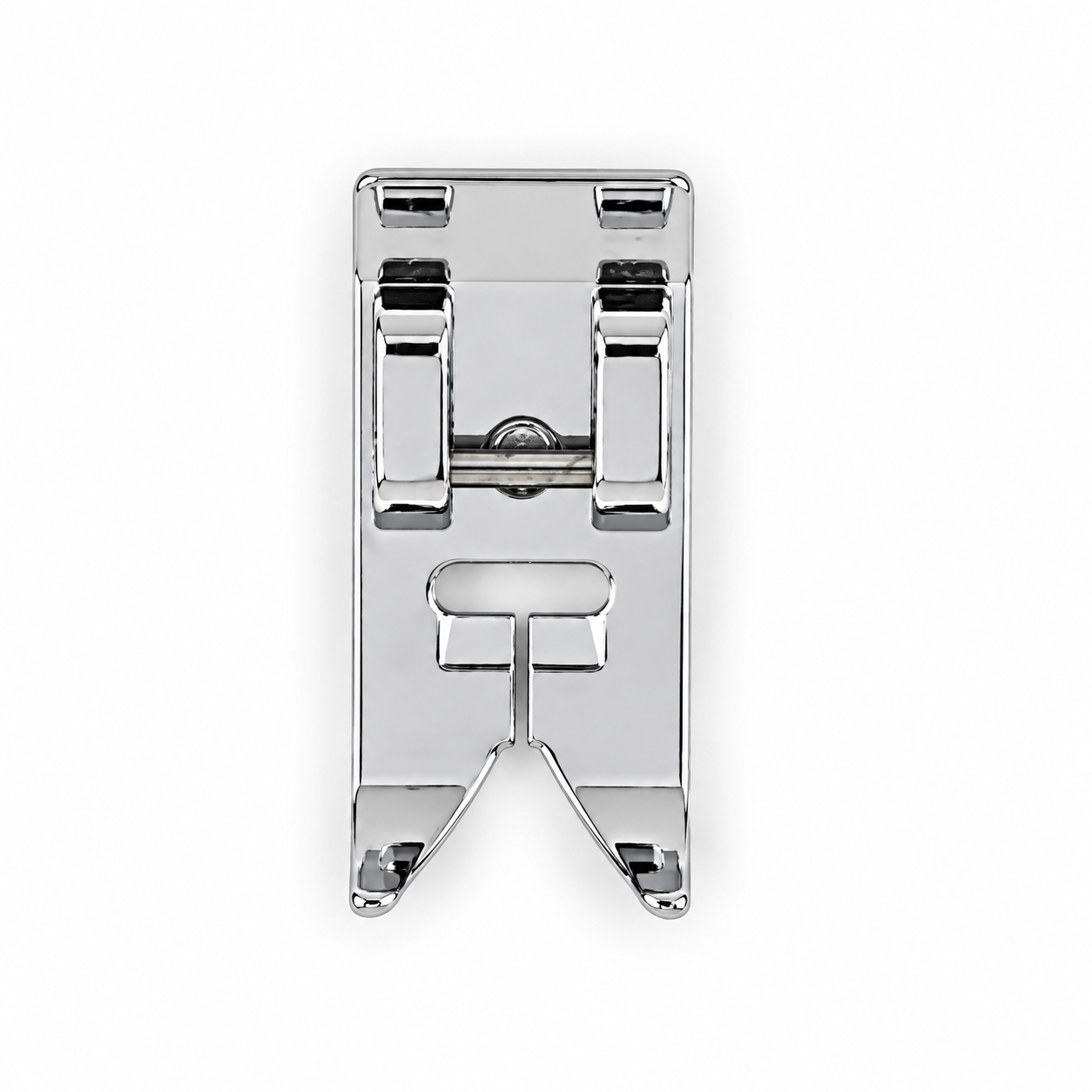
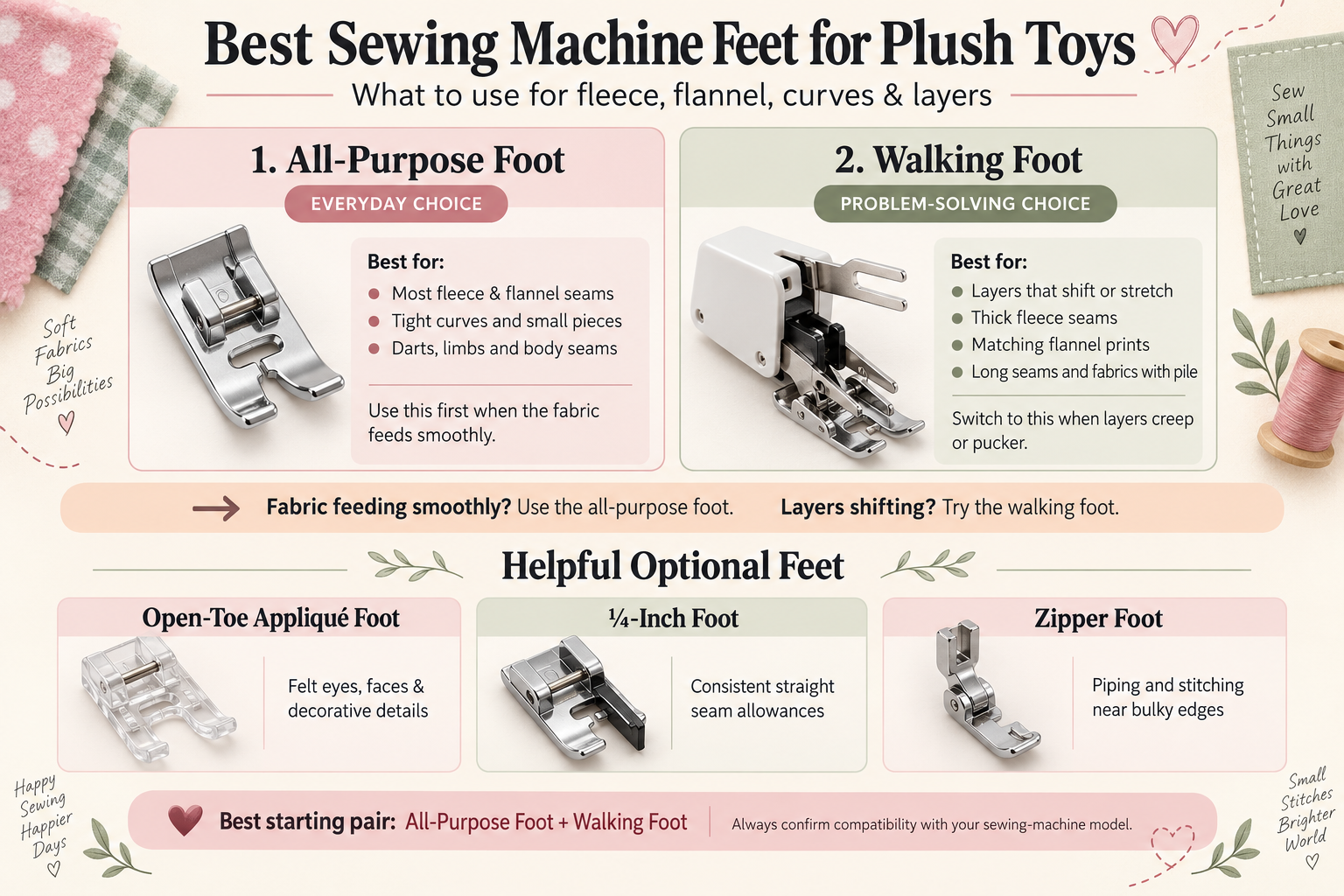
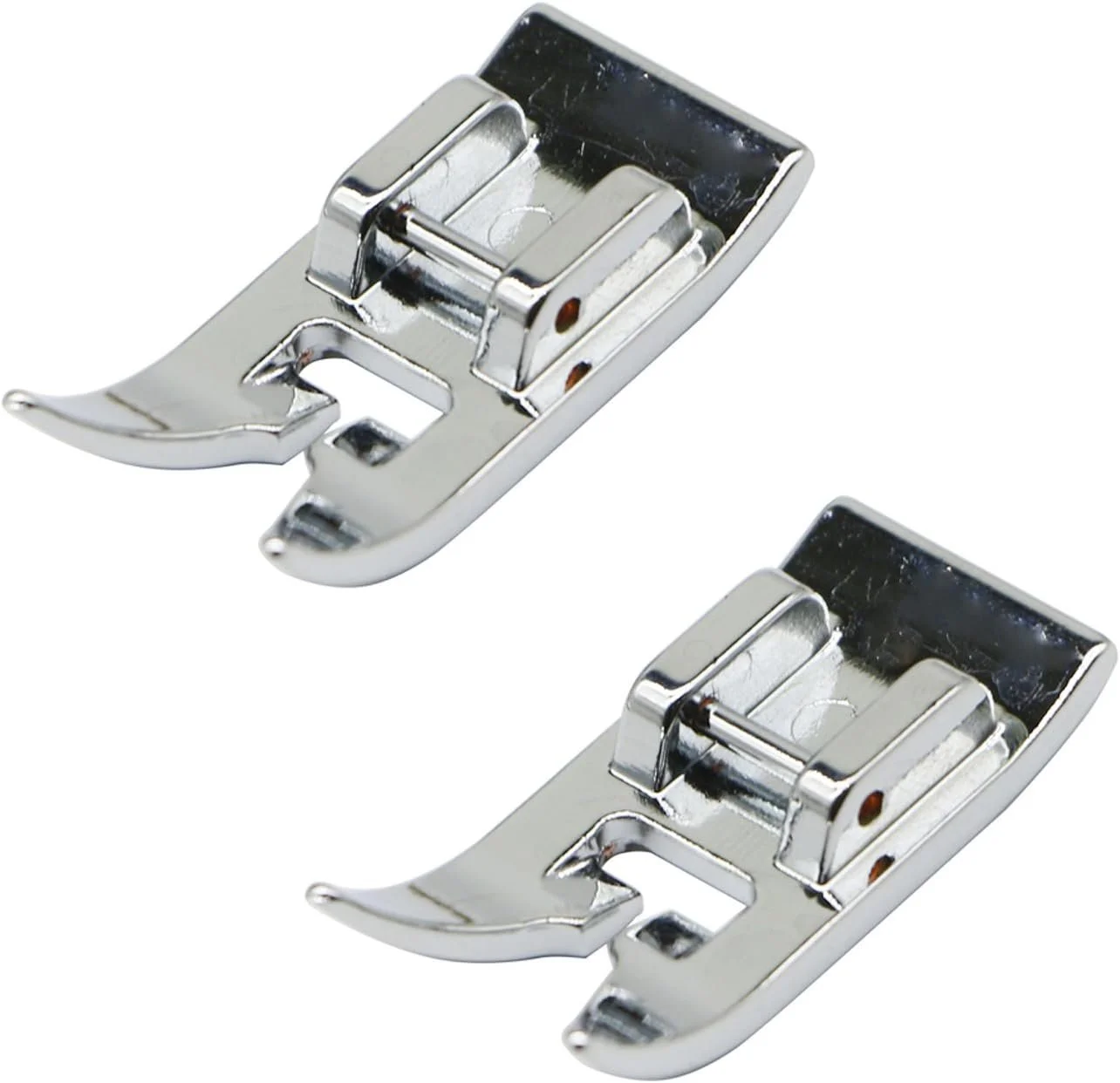
All-Purpose Foot
The all-purpose foot—also called a zigzag foot on some machines—is the standard foot used for everyday sewing.
It usually comes with the sewing machine and accommodates several basic stitches, including straight, zigzag and some decorative stitches.
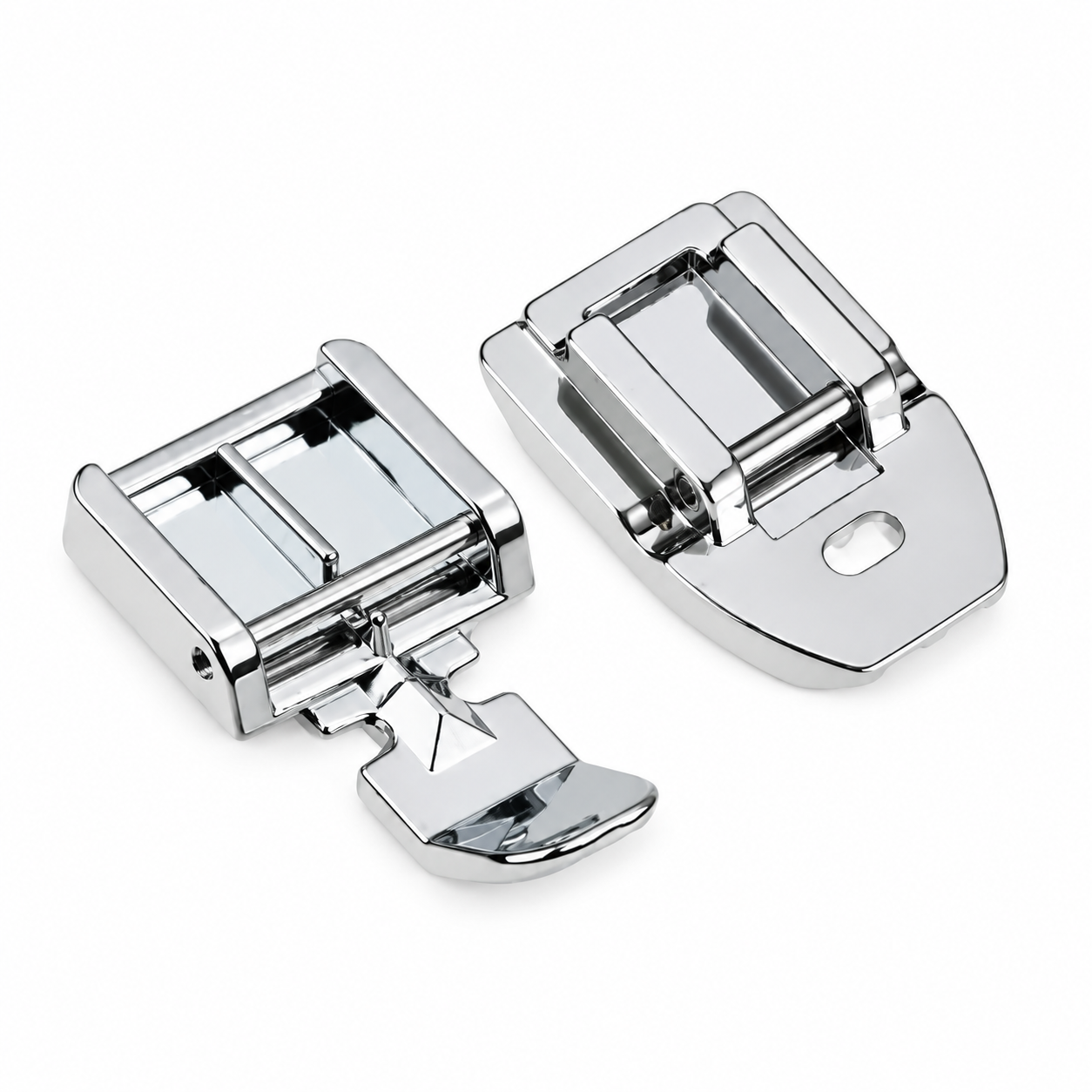
Zipper & Invisible Zipper Foot
Used for standard and exposed zippers, piping and stitching close to narrow or raised edges.
An invisible zipper foot is designed specifically for invisible—or concealed—zippers.
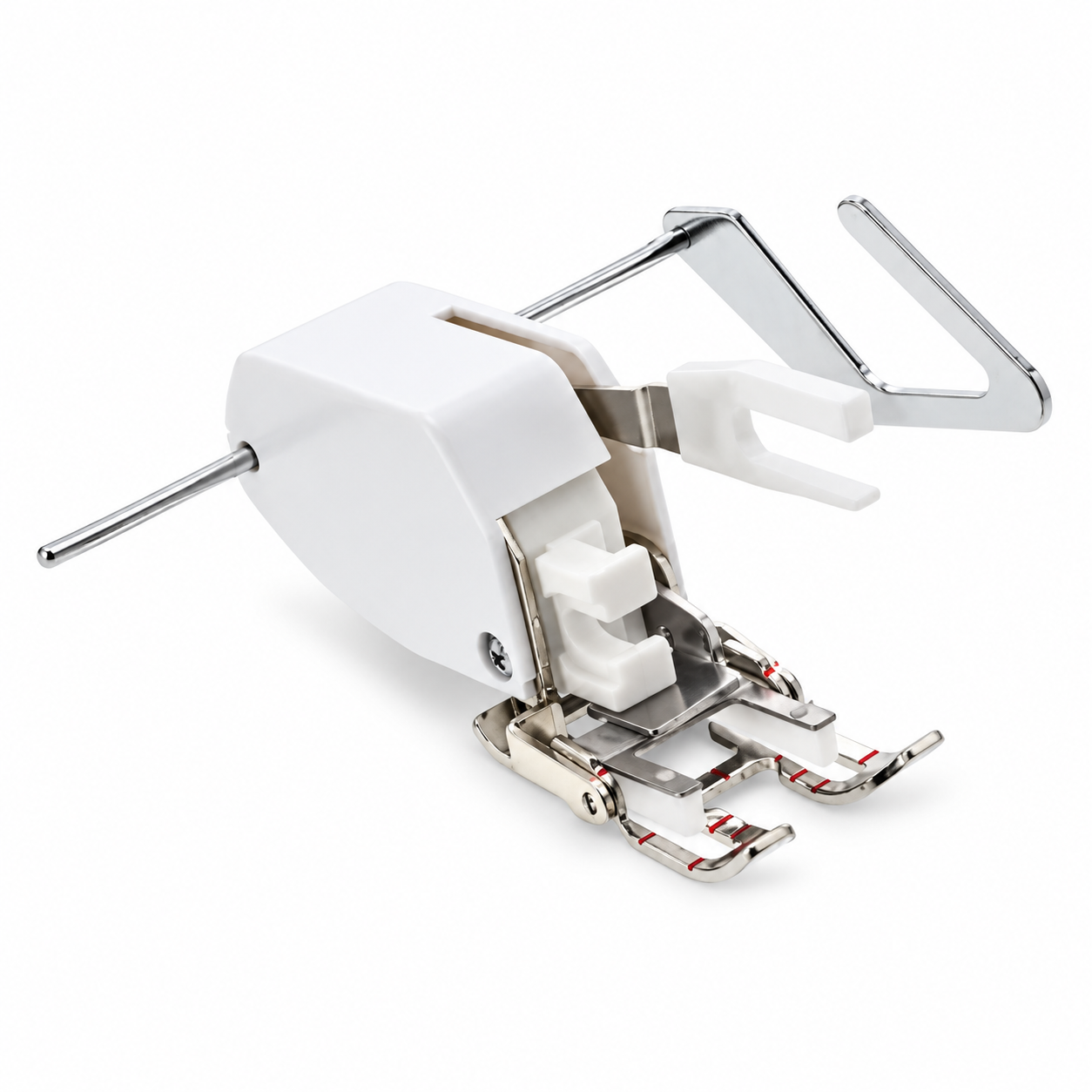
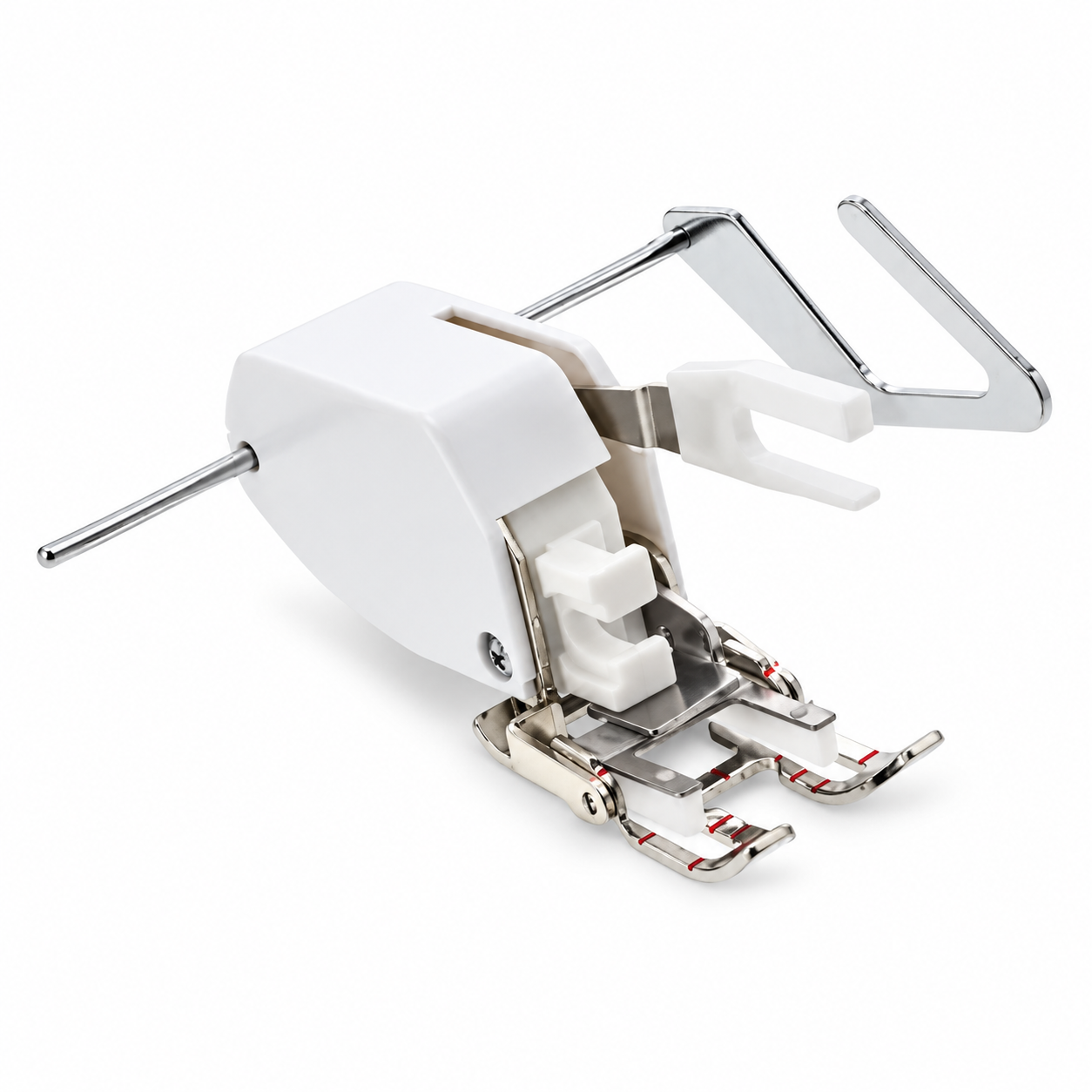
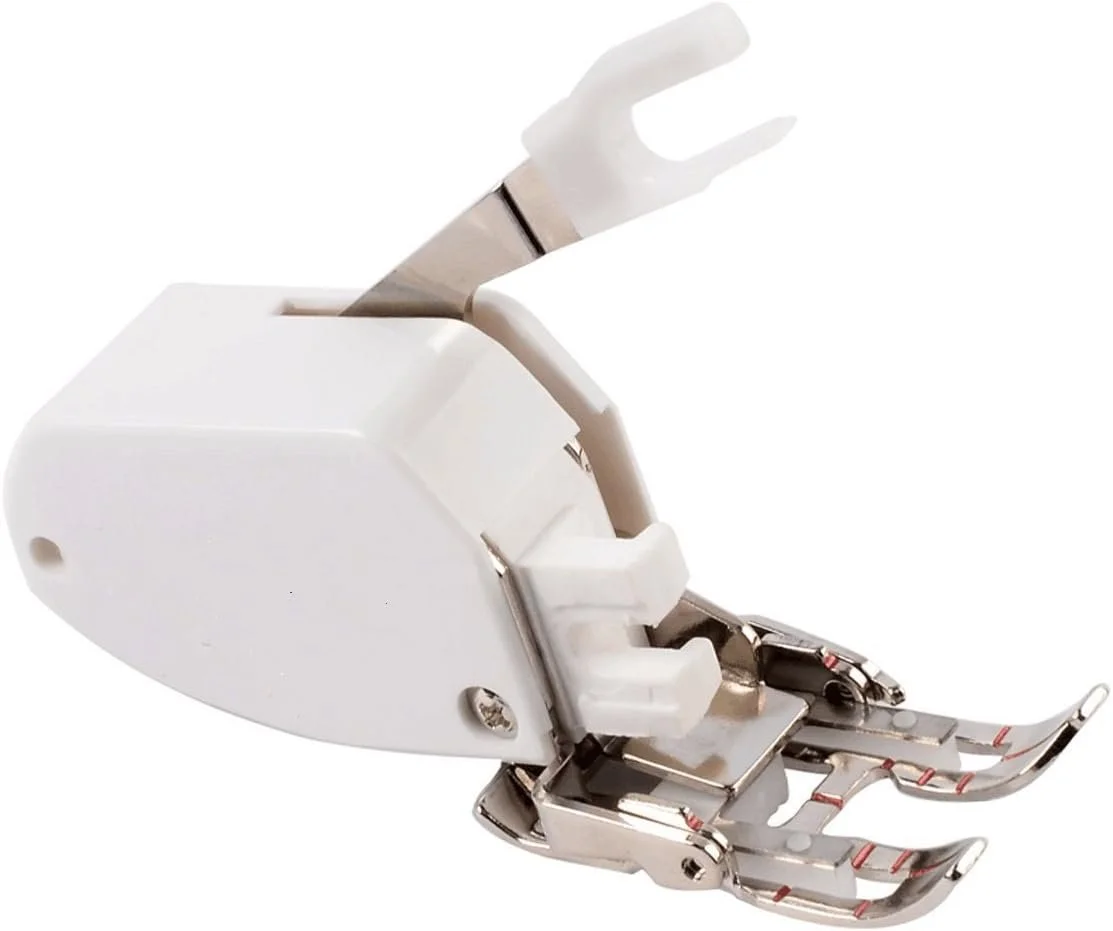
Walking Foot
A walking foot—also called an even-feed foot—helps feed the upper layers of fabric at approximately the same rate as the machine’s feed dogs move the bottom layer.
This reduces shifting, puckering and uneven feeding
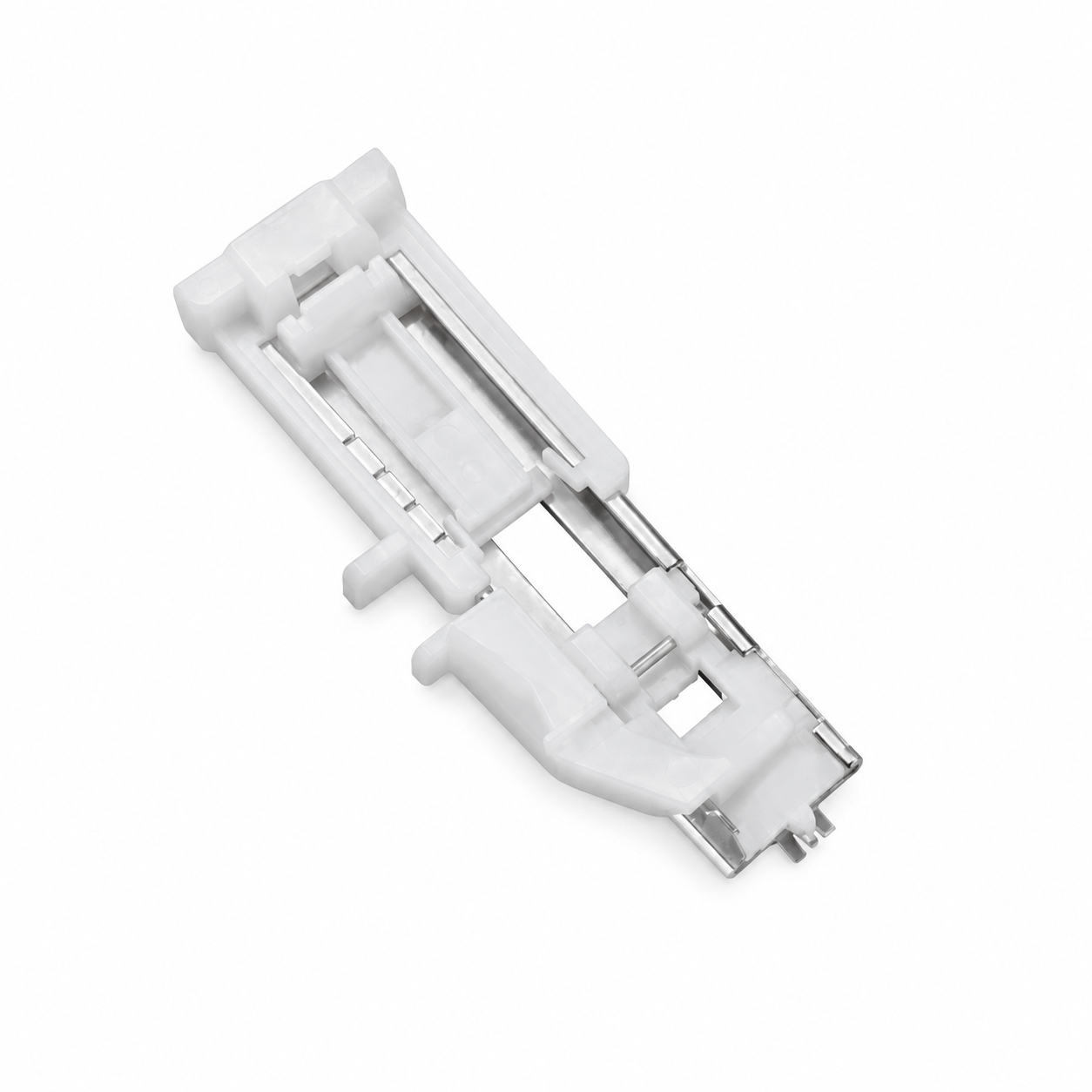
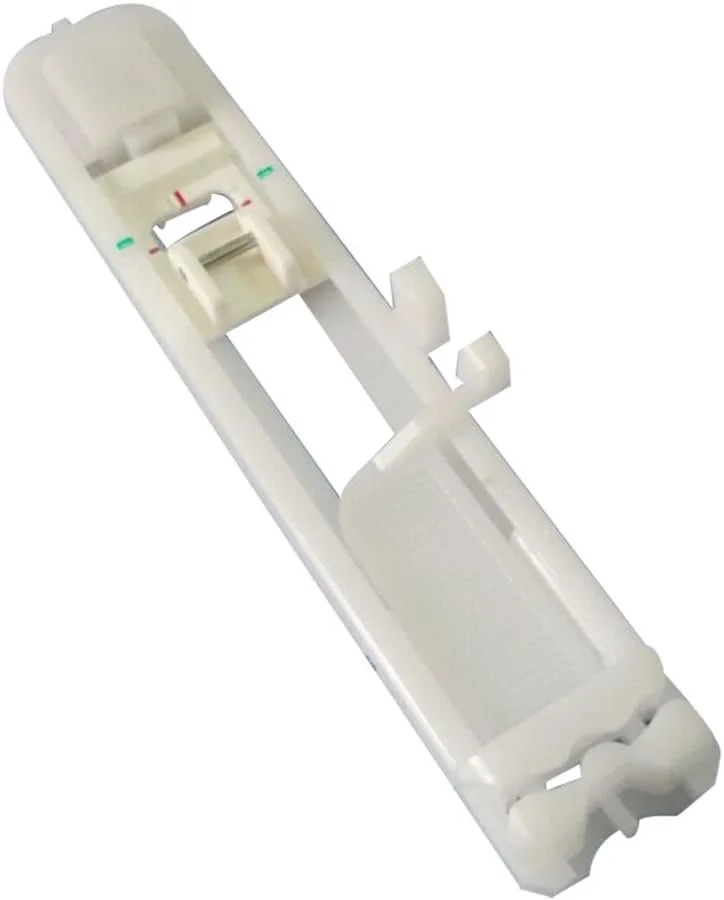
Buttonhole Foot
A buttonhole foot helps guide the fabric while your machine sews consistent buttonholes. Some machines use a basic sliding buttonhole foot, while machines with a one-step automatic buttonhole feature may use a longer foot that measures the button and determines the buttonhole length.
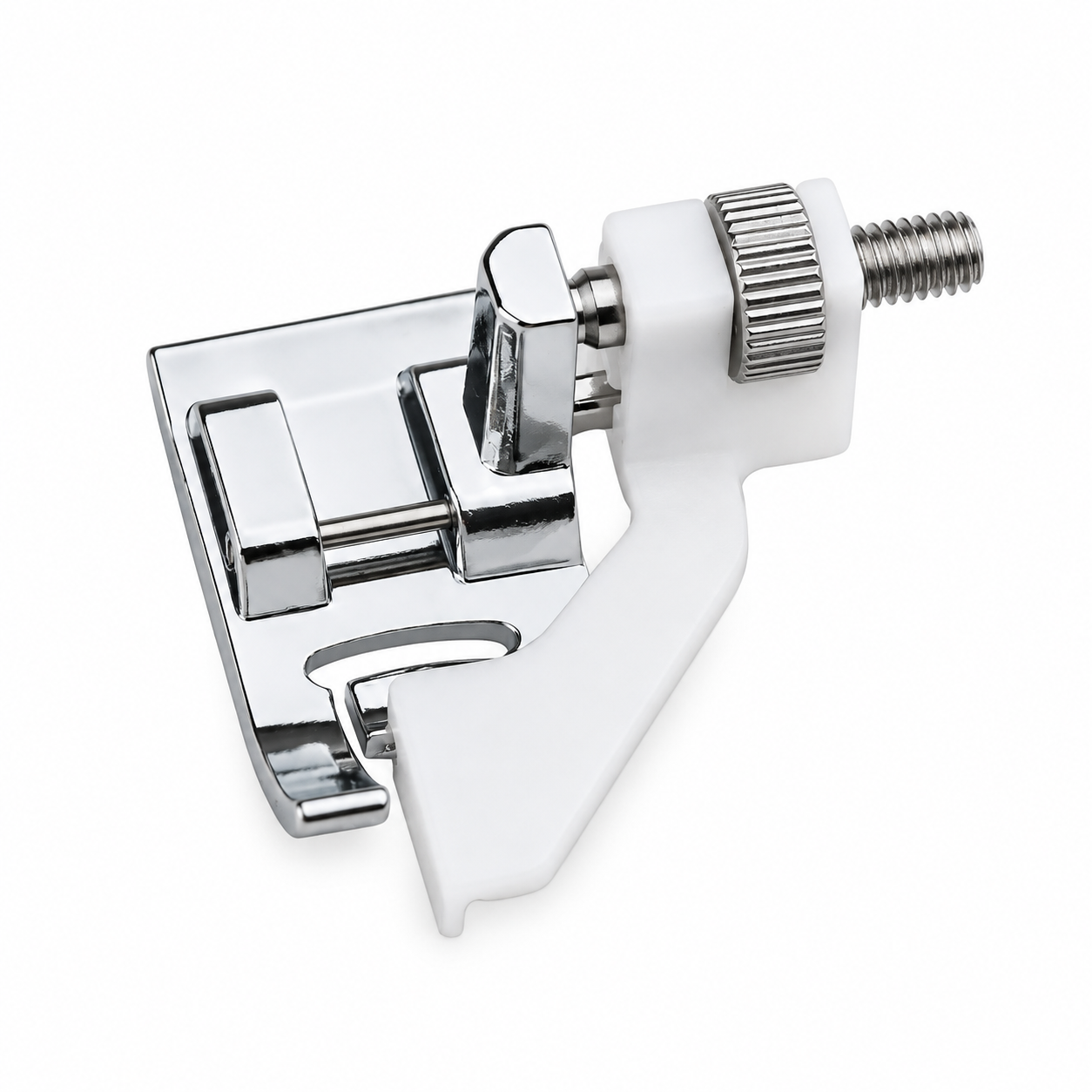
Blind Hem Foot
A blind hem foot has a guide that runs along the folded edge of the fabric, helping the needle catch only a small amount of fabric with each blind-hem stitch.
This creates a hem with stitches that are nearly invisible from the right side.
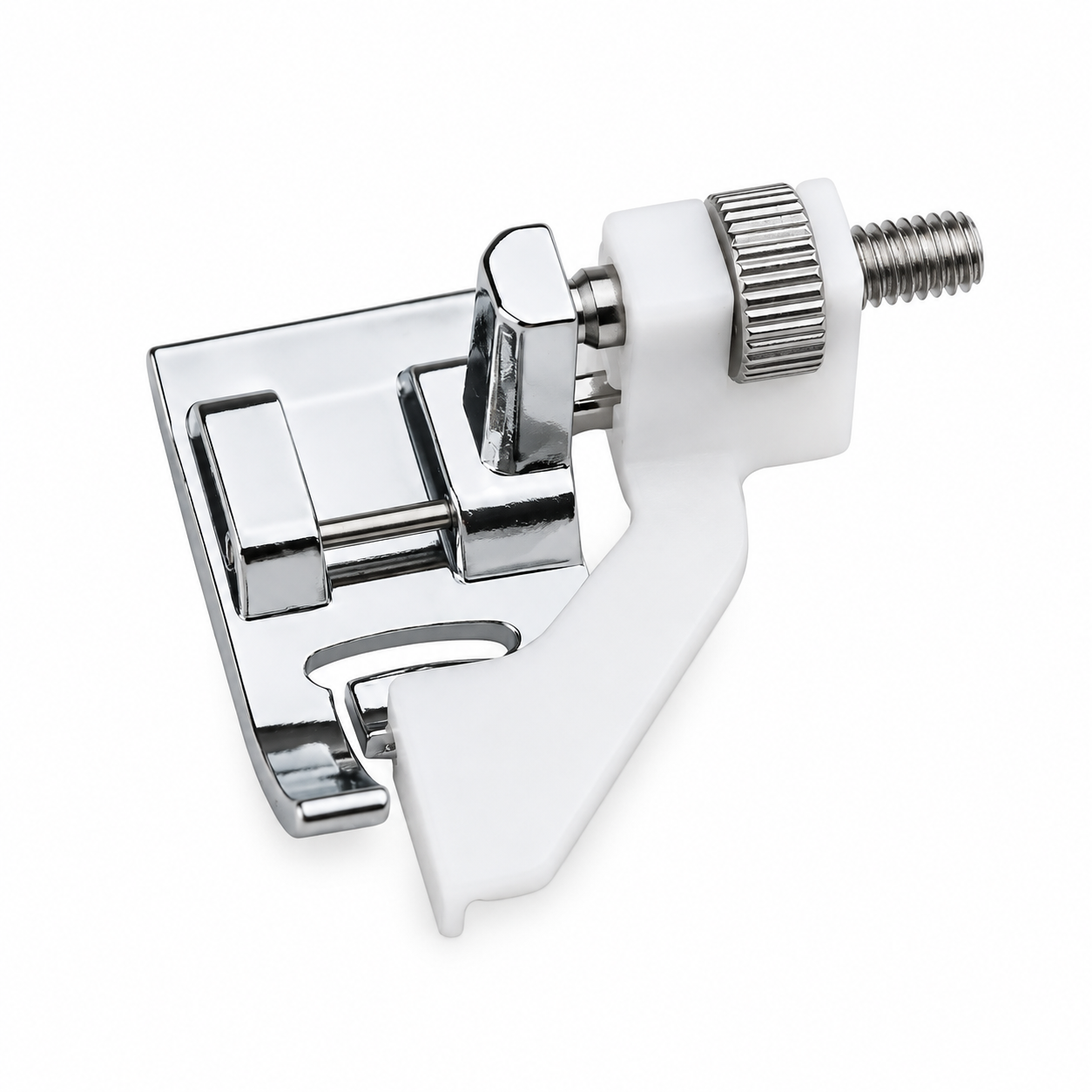
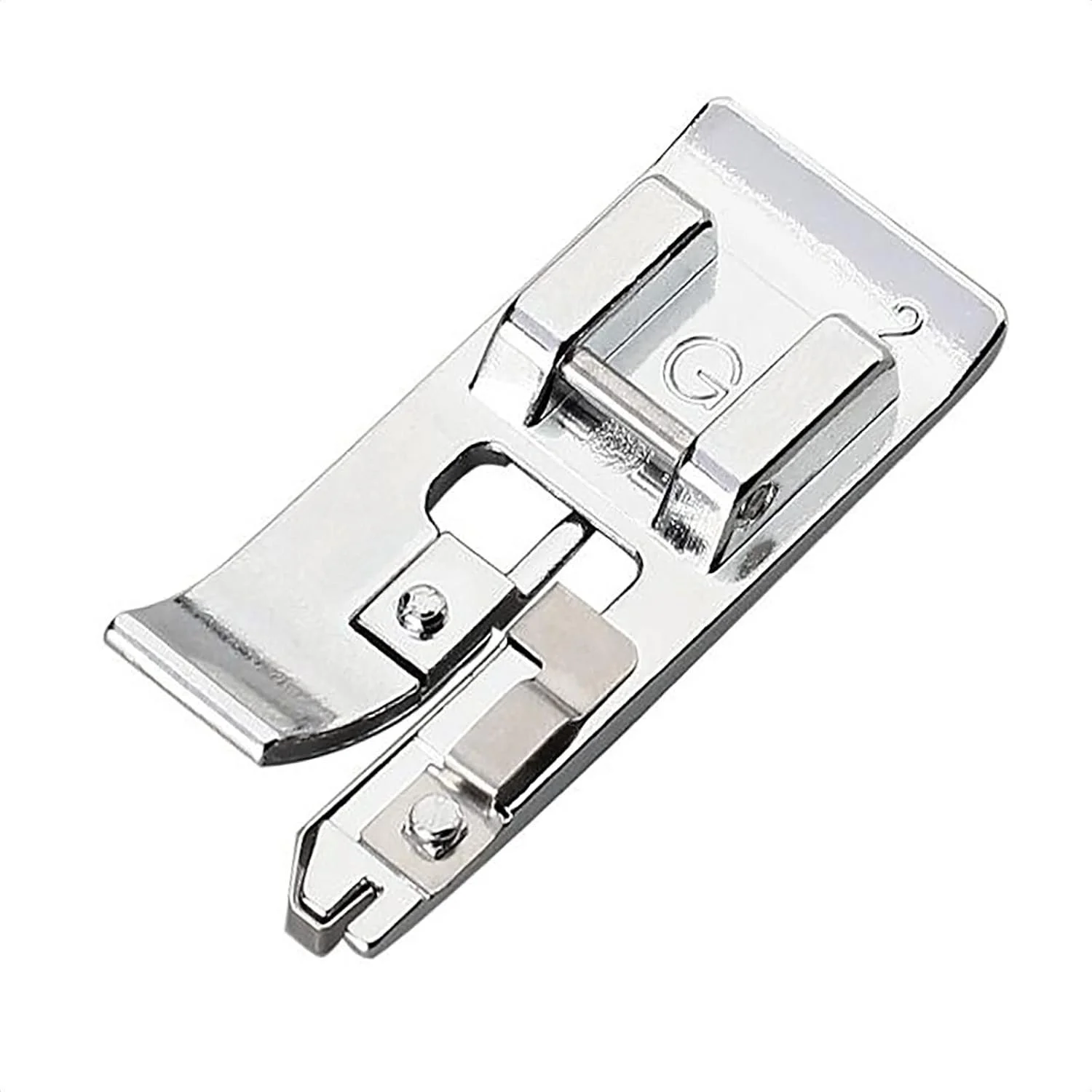
Overcasting Foot
Helps guide the fabric while a zigzag, overcasting or overedge stitch wraps over the raw edge.
Helps prevent the fabric edge from curling or puckering as you sew.
Specialty Sewing Machine Feet
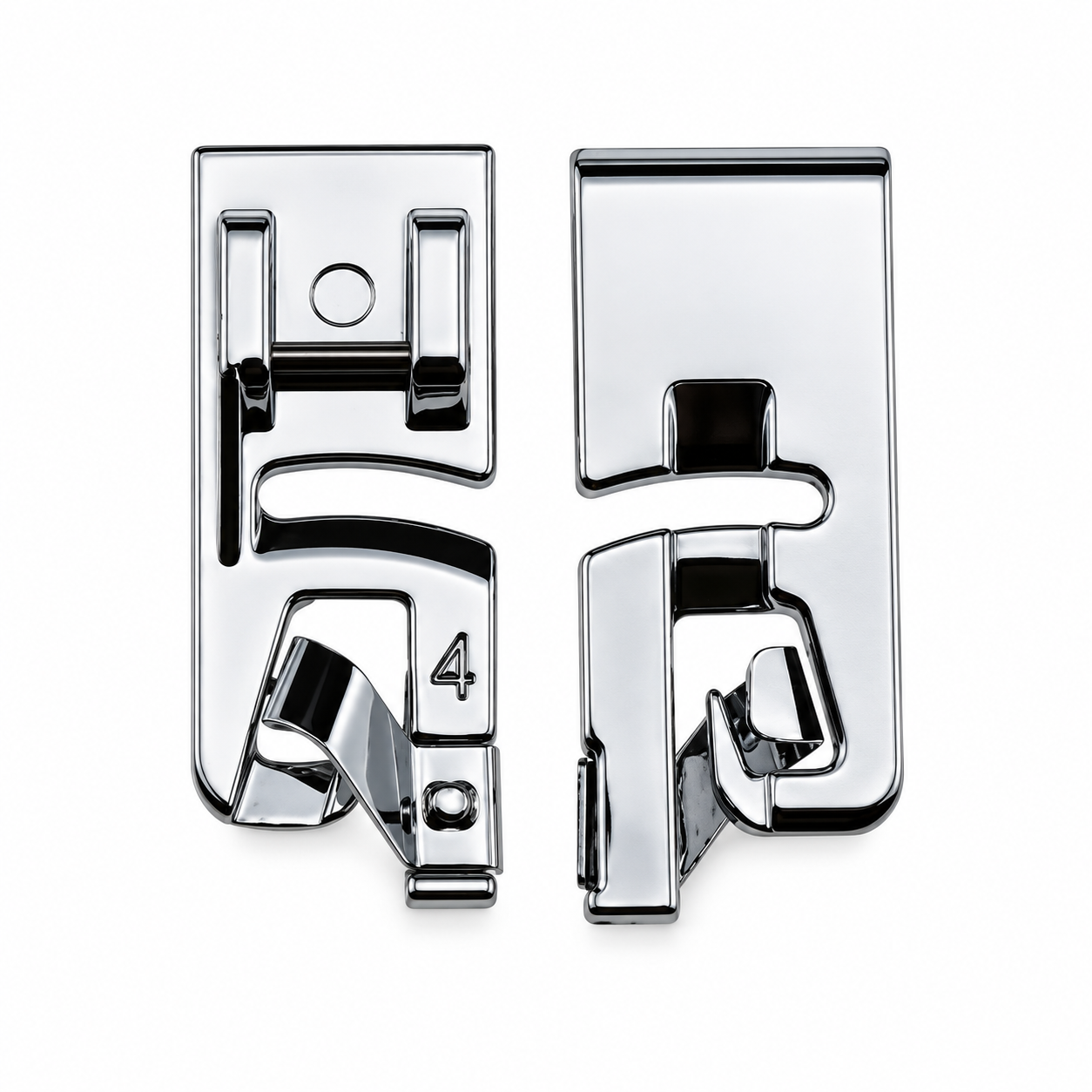
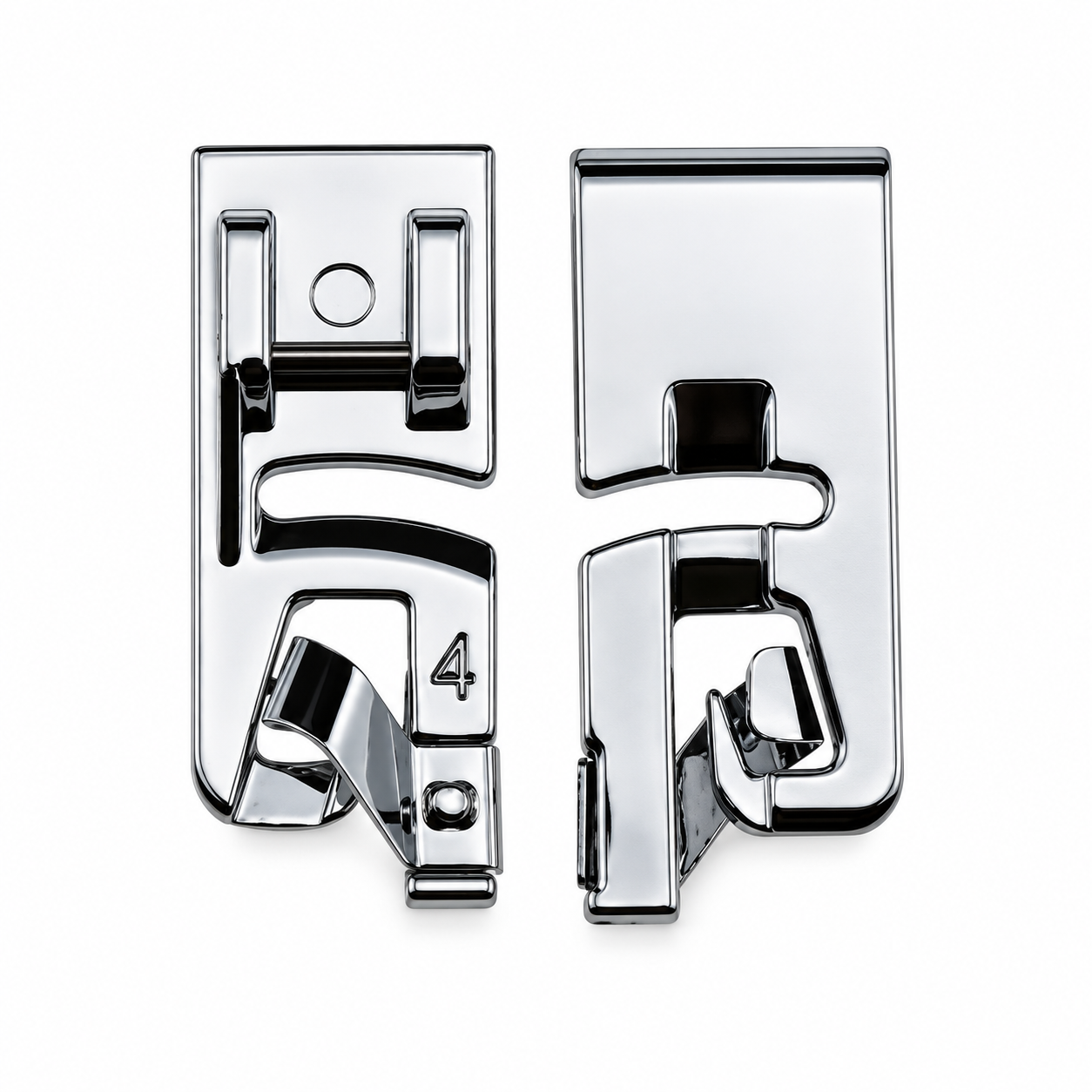
Rolled Hem Foot
has a curled guide that folds the raw fabric edge twice as it passes under the foot. The machine then stitches the narrow folded hem in place.
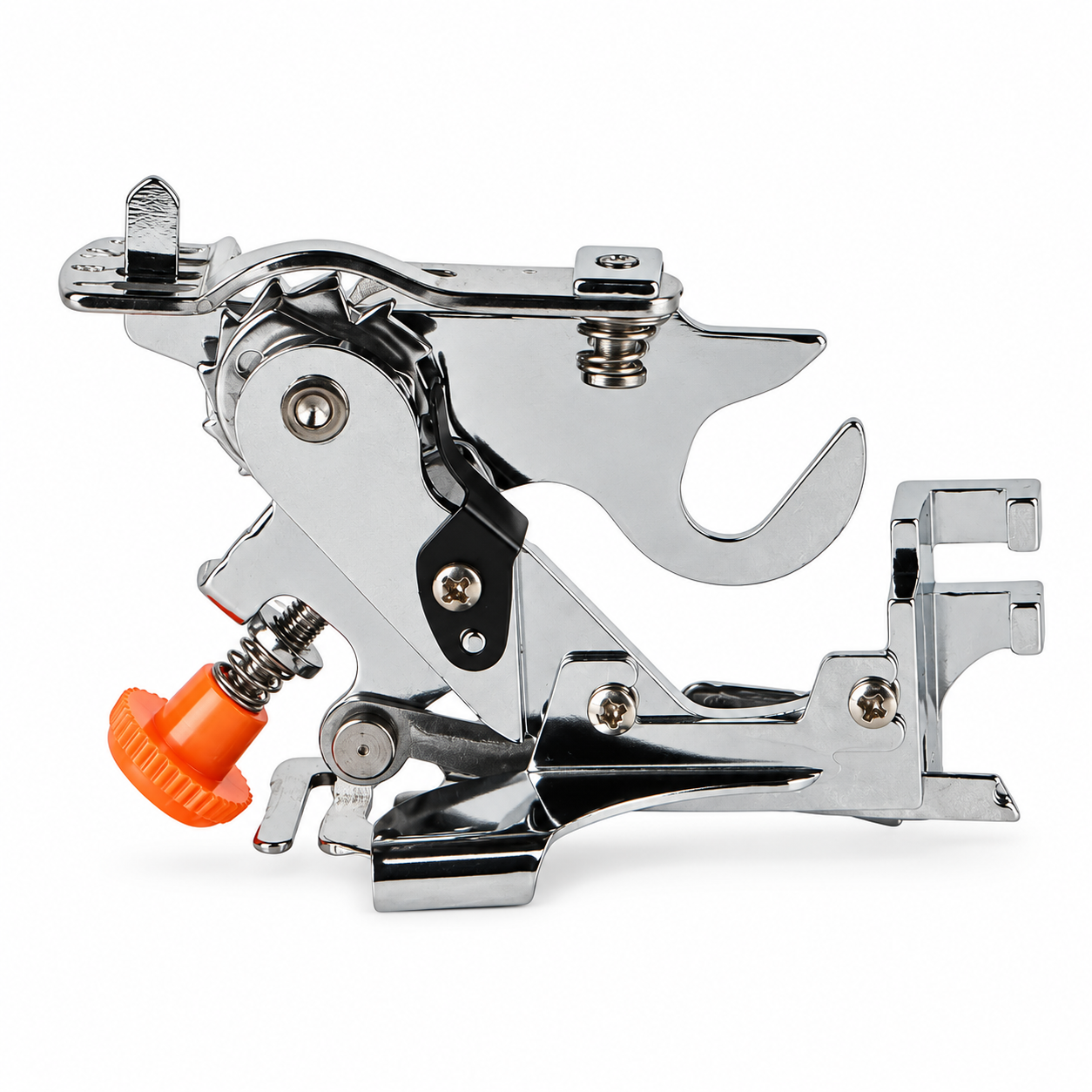
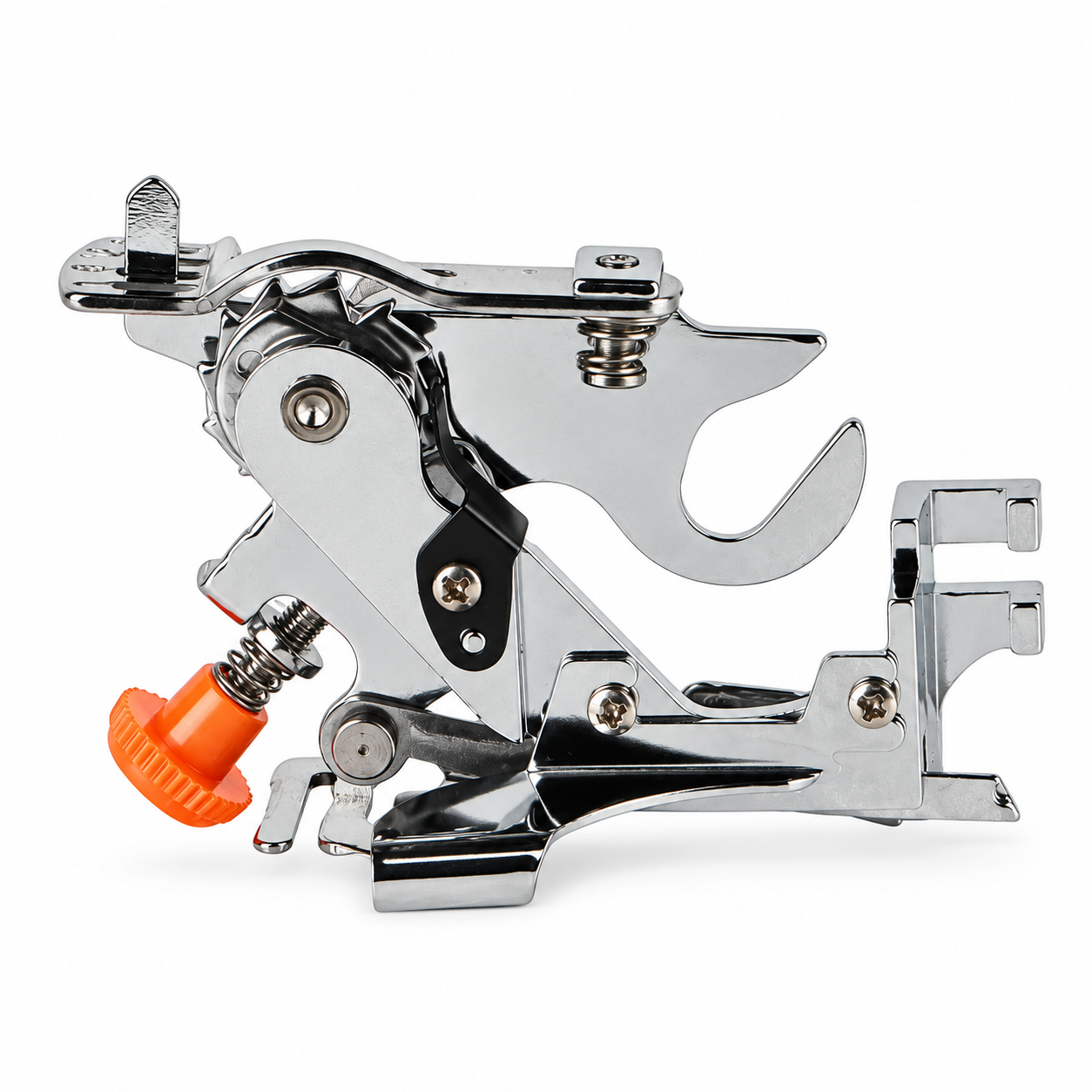
Ruffler Foot
A ruffler attachment forms evenly spaced gathers or pleats as the fabric passes through the machine.
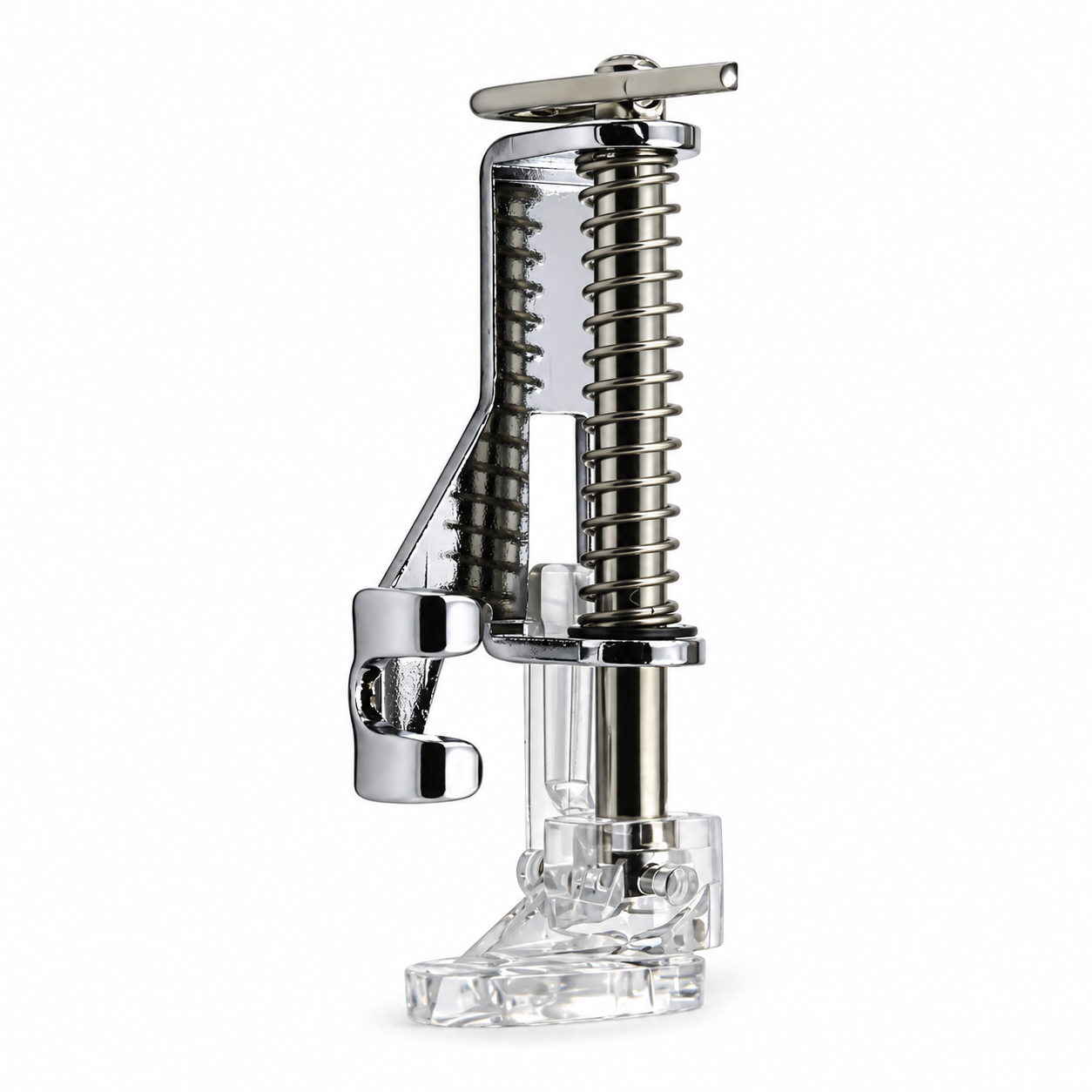
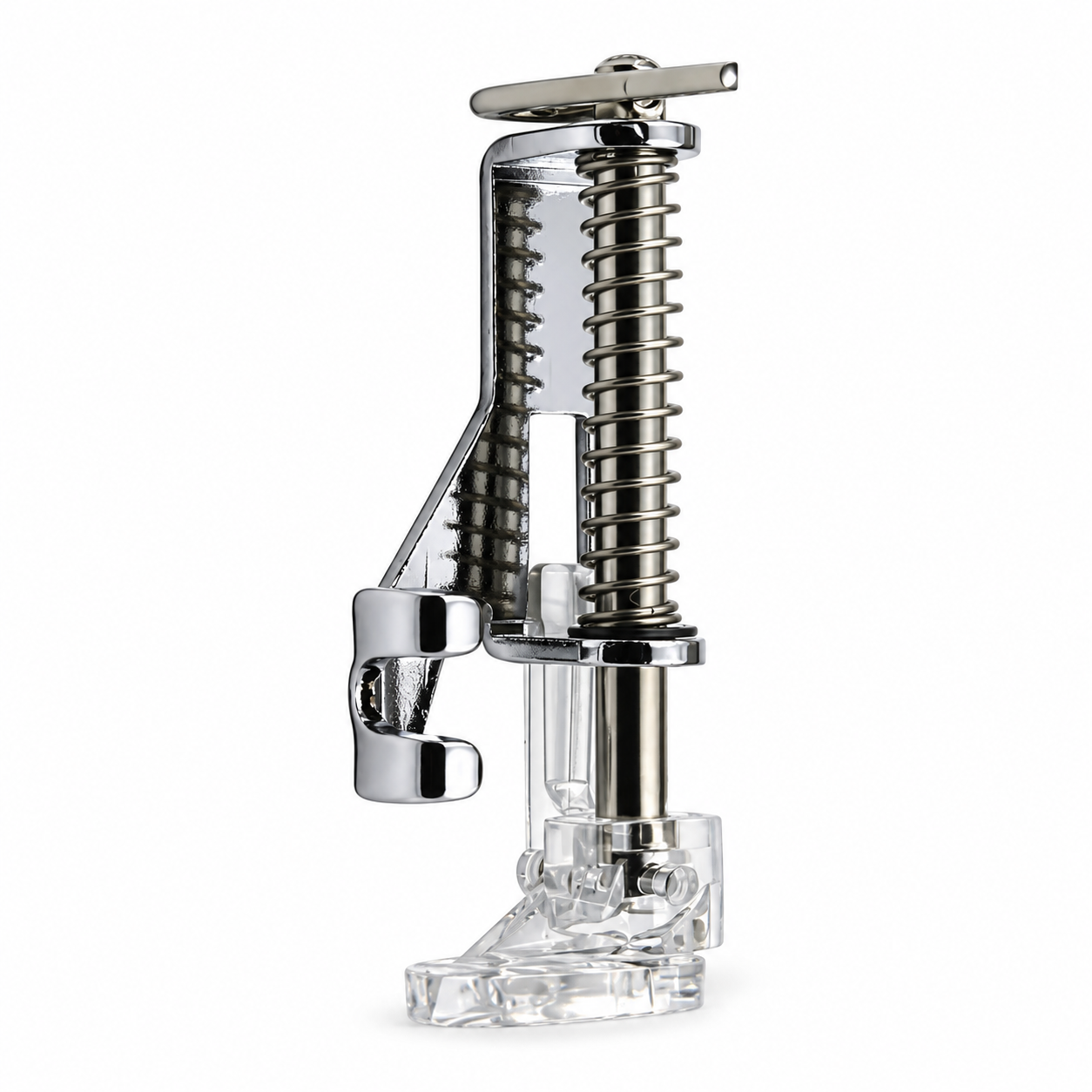
Free-Motion Quilting Foot
Moves vertically with the needle while leaving room for you to guide the fabric manually in any direction.
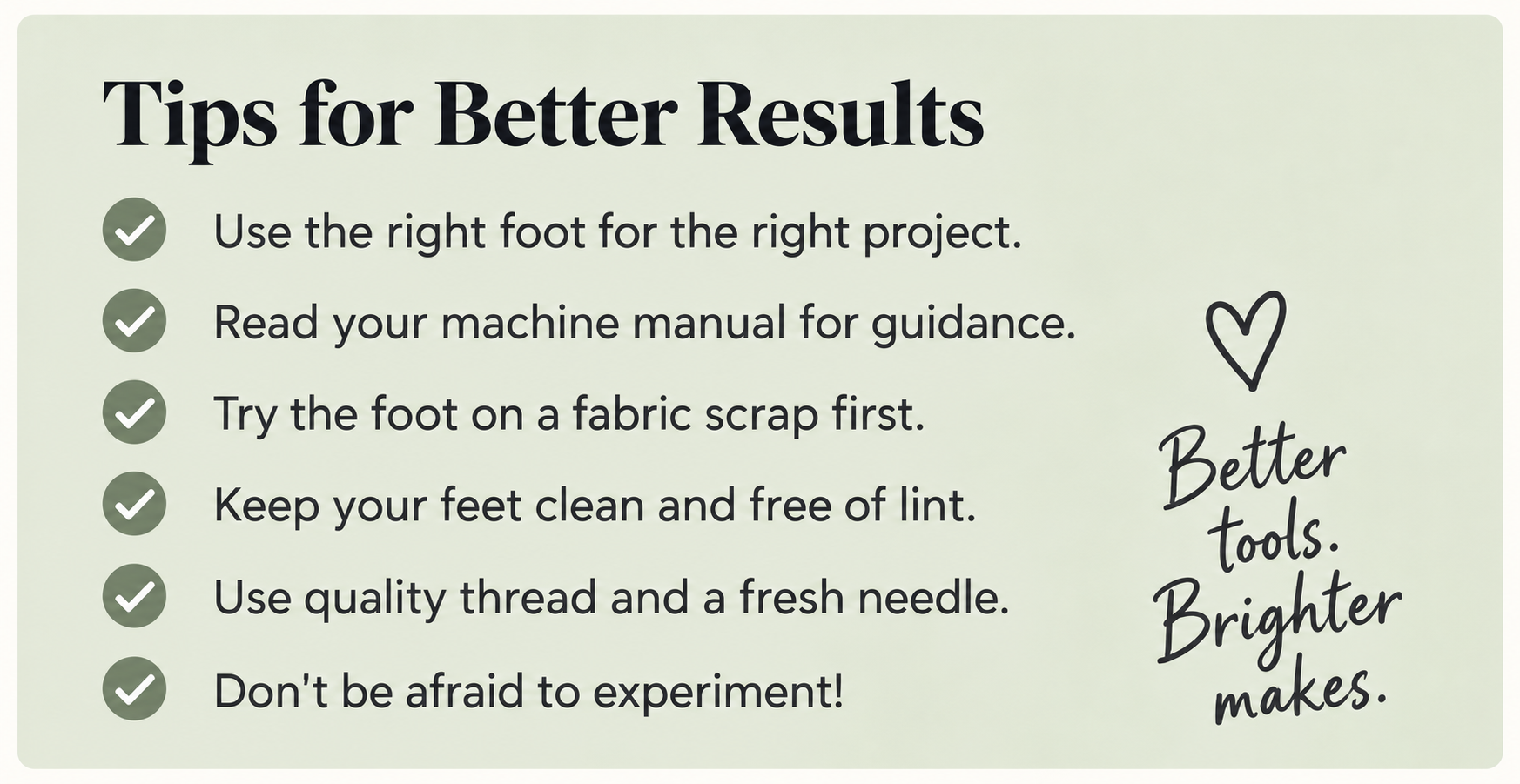
Check Compatibility: Presser feet are not universally interchangeable.
Confirm the machine model, shank type, attachment method and stitch-width compatibility before purchasing a foot.
Check Needle Clearance: After attaching a new foot and selecting your stitch, turn the handwheel slowly toward you through a complete stitch cycle. Make sure the needle clears the foot before sewing under power.
Adjust the Settings: Depending on the foot and fabric, you may need to adjust the stitch length, stitch width, needle position, thread tension or presser-foot pressure.
Sew at a Controlled Speed: Specialty attachments such as rufflers, walking feet and rolled-hem feet are often easier to control at a moderate speed.
Shop Sewing Machine Feet
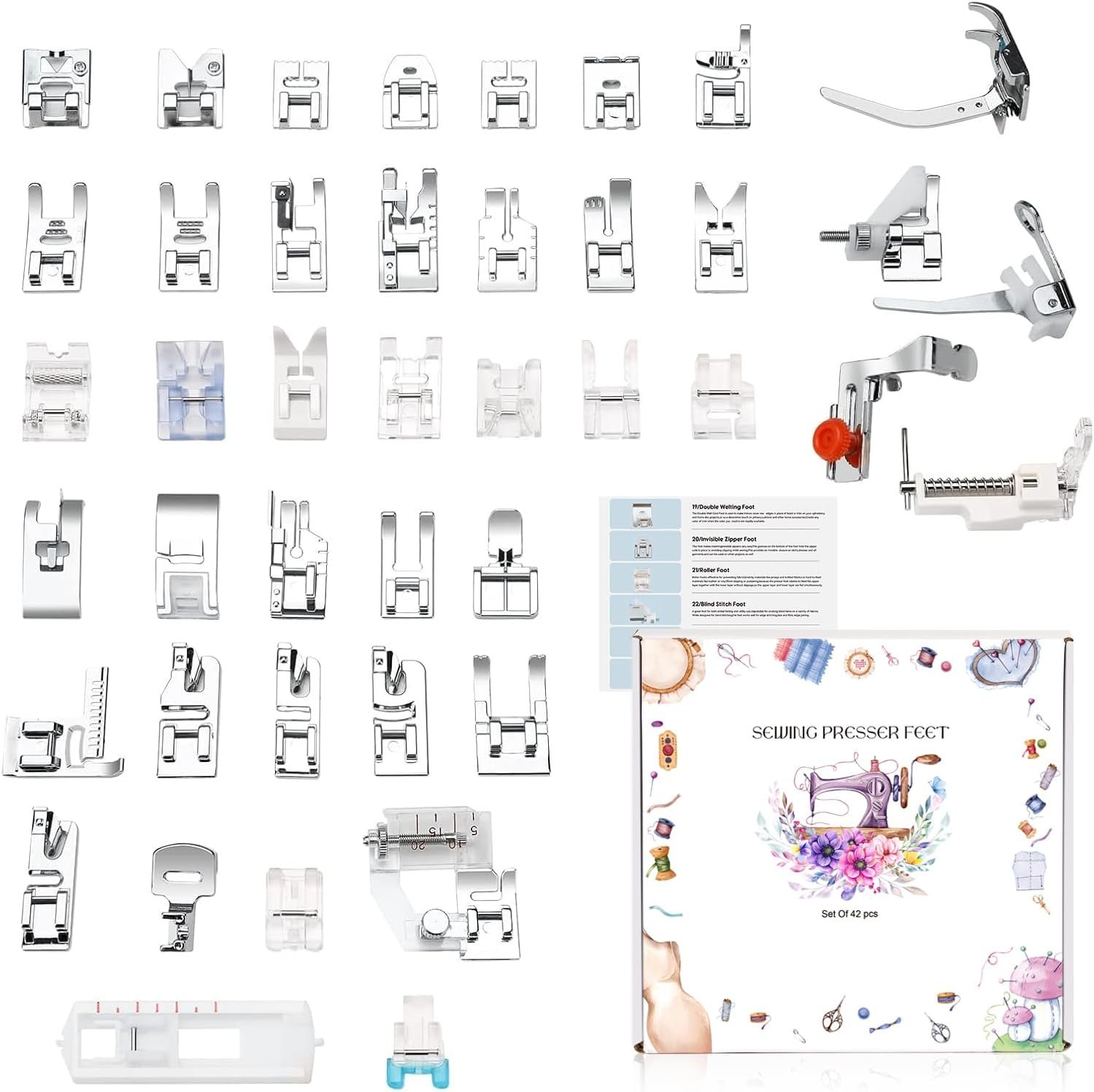
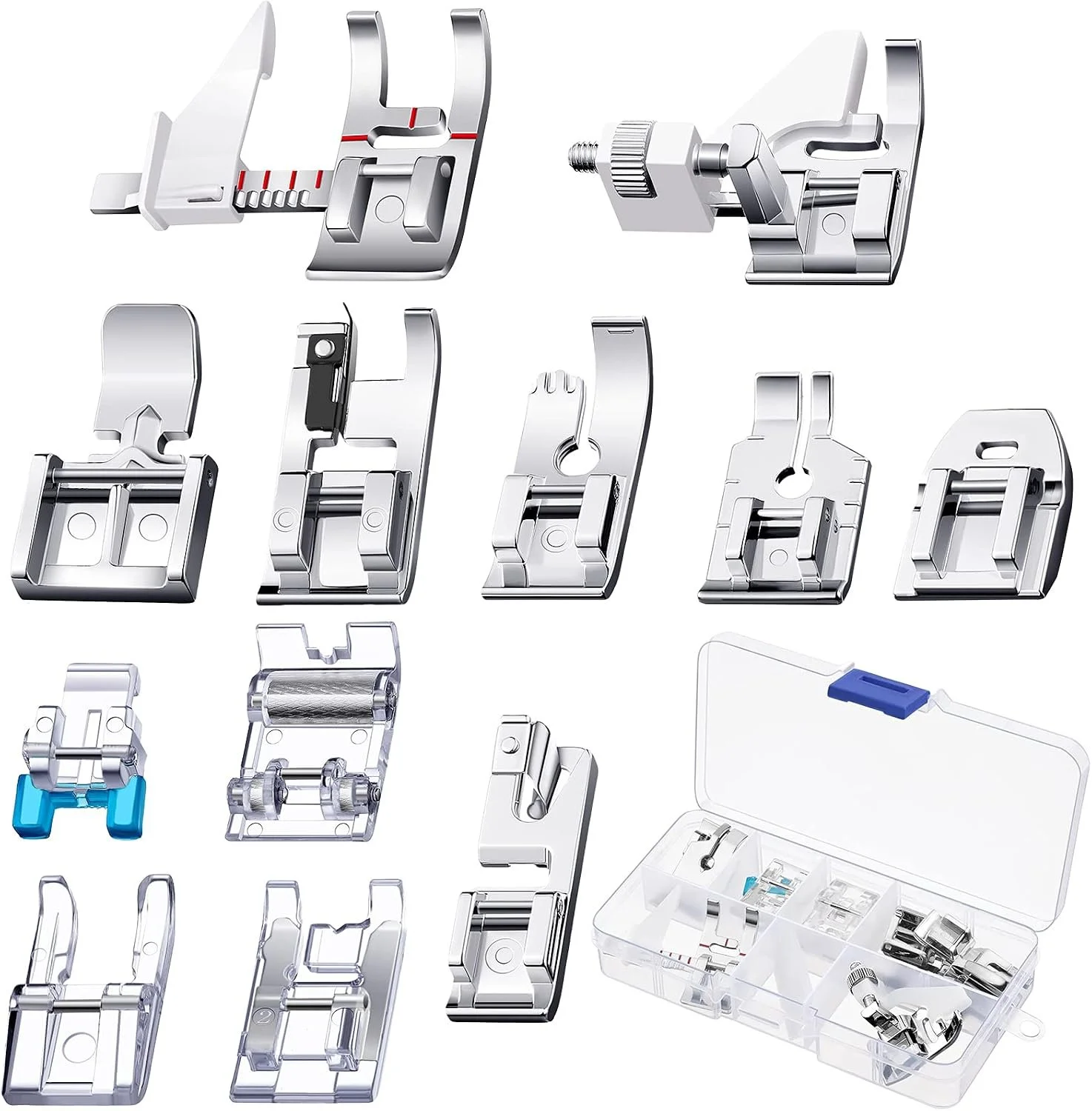
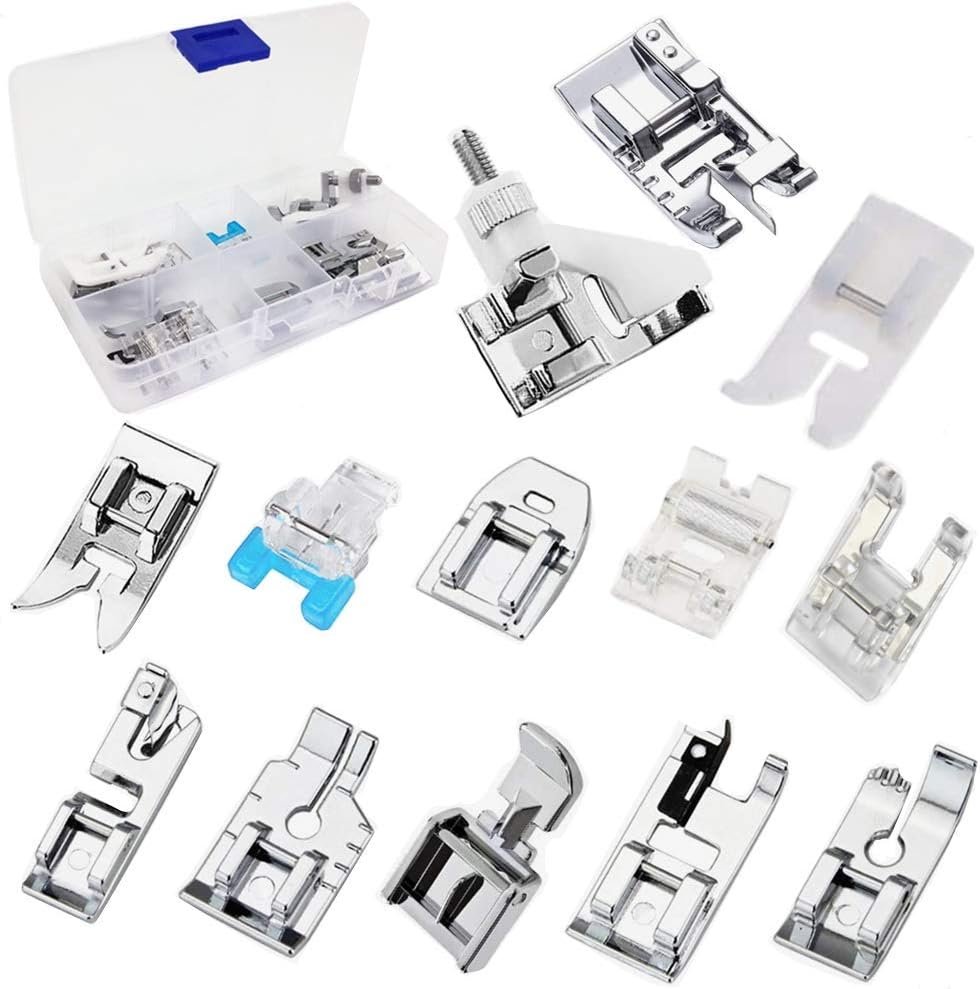
Below are some of our favorite sewing machine feet available through our affiliate partners.
Affiliate Disclosure: This post contains affiliate links. If you purchase something through one of these links, Sew Cute Patterns may earn a small commission at no additional cost to you. As an Amazon Associate, I earn from qualifying purchases.
Shop Patterns
Shop Sew Cute Patterns | Visit Our Etsy Store
Shop Patterns | sewing tutorials | sewing blog | Shop sewing supplies