How to Fix Common Sewing Issues Like a Pro

What Went Wrong?
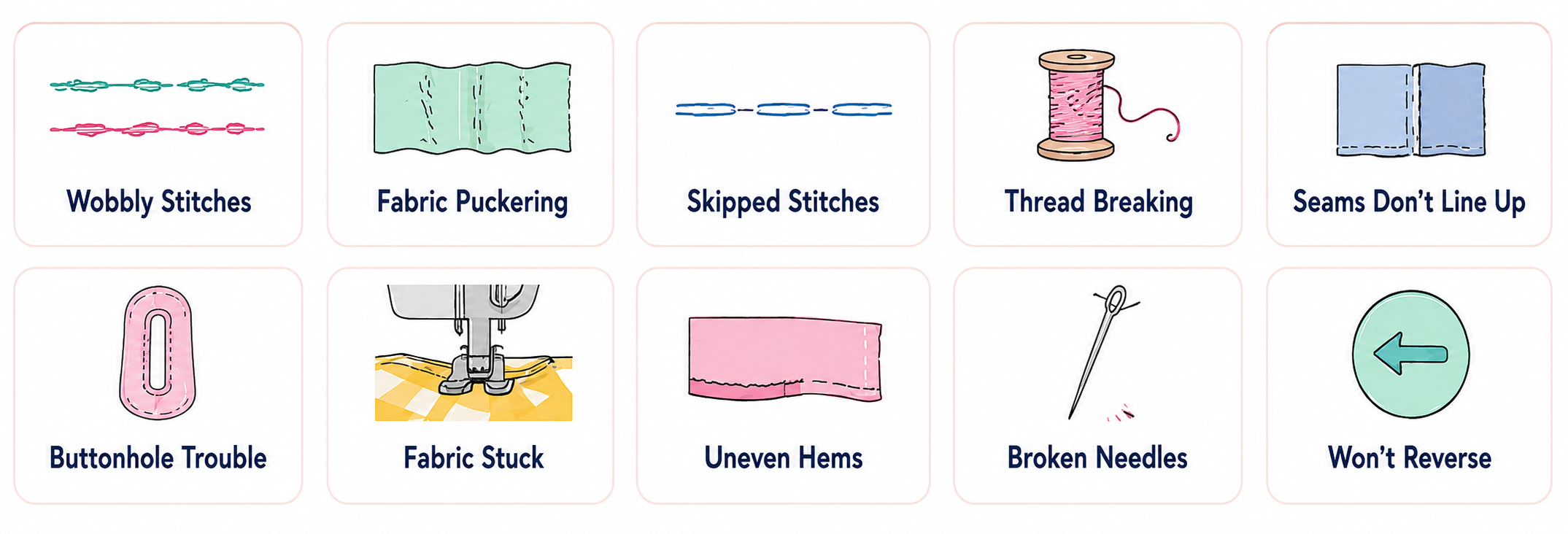
1. Uneven or Wobbly Stitches
The Problem: Your stitches look messy, uneven, or too tight/loose.
The Fix:
Check your thread tension. Adjust the tension dial on your machine (higher for tighter stitches, lower for looser stitches).
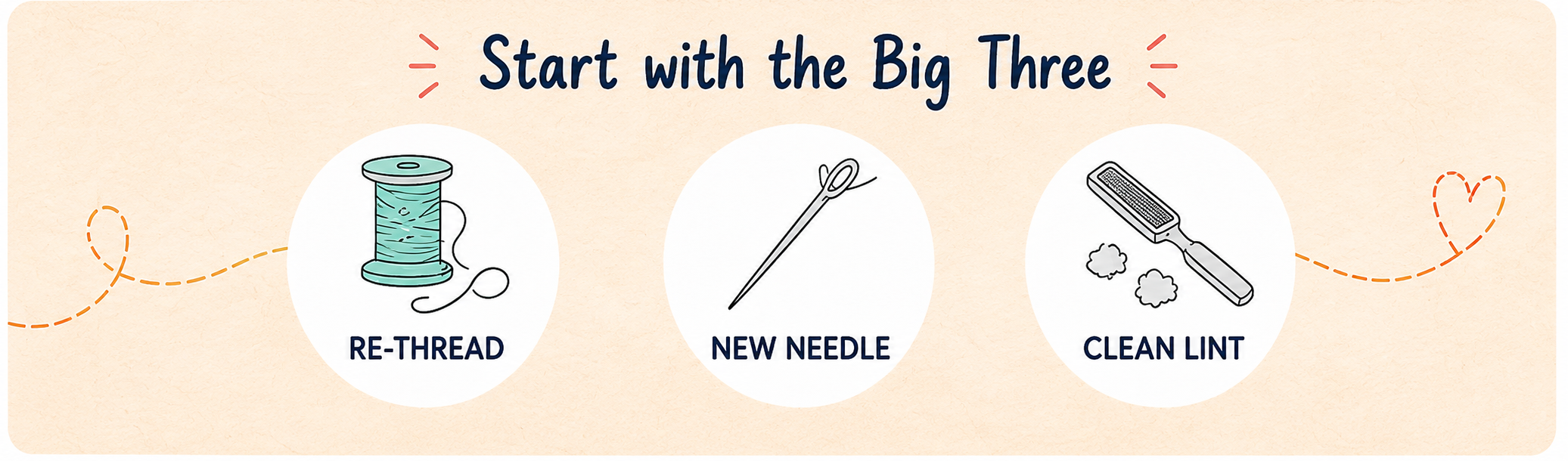
Re-thread your machine, making sure the thread is properly seated in the tension disks.
Replace the needle—a dull or bent needle can cause uneven stitching.
2. Fabric Puckering
The Problem: Your fabric bunches up or gathers under the stitches.
The Fix:
Use a fresh, sharp needle appropriate for your fabric type (e.g., a ballpoint needle for knits).
Loosen the thread tension slightly.
Stabilize lightweight or stretchy fabrics with tissue paper or a stabilizer, which can be torn away after sewing.
3. Skipped Stitches
The Problem: Your machine skips stitches, leaving gaps in your seams.
The Fix:
Replace the needle with one that’s the correct size and type for your fabric.
Check that the needle is inserted correctly and fully tightened.
Clean your machine—lint or debris in the bobbin area can cause skipped stitches.
4. Thread Breaking
The Problem: Your thread keeps snapping while you sew.
The Fix:
Check for rough spots on the needle or thread path that could be causing friction.
Use high-quality thread—cheap thread is more prone to breaking.
Ensure the thread is properly threaded through the machine, including the tension disks.
5. Seams That Don’t Line Up
The Problem: Your fabric pieces don’t match up at the seams, leaving gaps or uneven edges.
The Fix:
Pin or clip your fabric pieces together before sewing, matching notches and edges carefully.
Use a walking foot to help feed layers evenly through the machine.
Press seams flat before sewing intersecting seams to ensure accuracy.
6. Buttonholes Gone Wrong
The Problem: Your buttonholes are uneven, too tight, or too loose.
The Fix:
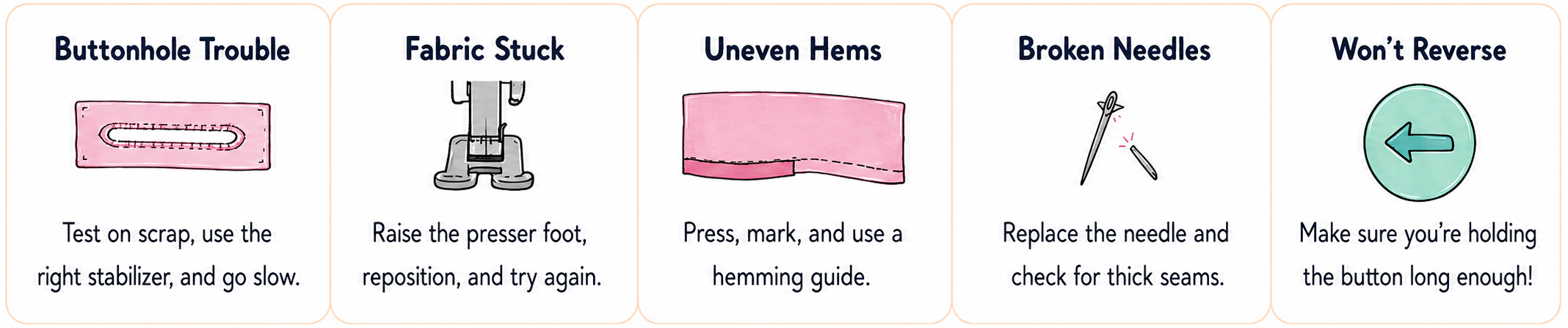
Test your buttonhole settings on a scrap piece of fabric before sewing on your project.
Use a stabilizer behind the fabric to prevent stretching or distortion.
If the buttonhole is too small, carefully unpick the end and resew it slightly larger.
7. Fabric Getting Stuck in the Machine
The Problem: Your fabric won’t feed through the machine smoothly.
The Fix:
Check the presser foot pressure and adjust it if necessary.
Clean the feed dogs to remove any lint or debris.
Use a walking foot or tissue paper to help slippery fabrics feed evenly.
8. Hemlines That Aren’t Even
The Problem: Your hem is uneven or wavy.
The Fix:
Measure and mark the hemline carefully before sewing. Use a hem gauge or ruler for precision.
Press the hem before sewing to create a crisp edge.
For wavy hems, try using a stabilizer or sewing with a slightly longer stitch length.
9. Stitches That Won’t Reverse
The Problem: Your machine won’t sew in reverse.
The Fix:
Check that the reverse stitch lever or button is engaged properly.
Clean the machine—sometimes lint or debris can interfere with the mechanism.
If the problem persists, consult your machine’s manual or take it in for servicing.
10. Broken Needles
The Problem: Your needle keeps breaking.
The Fix:
Ensure you’re using the correct needle for your fabric (e.g., denim needle for heavy fabrics).
Avoid pulling or pushing the fabric through the machine—let the feed dogs do the work.
Check that the needle is inserted correctly and fully tightened.
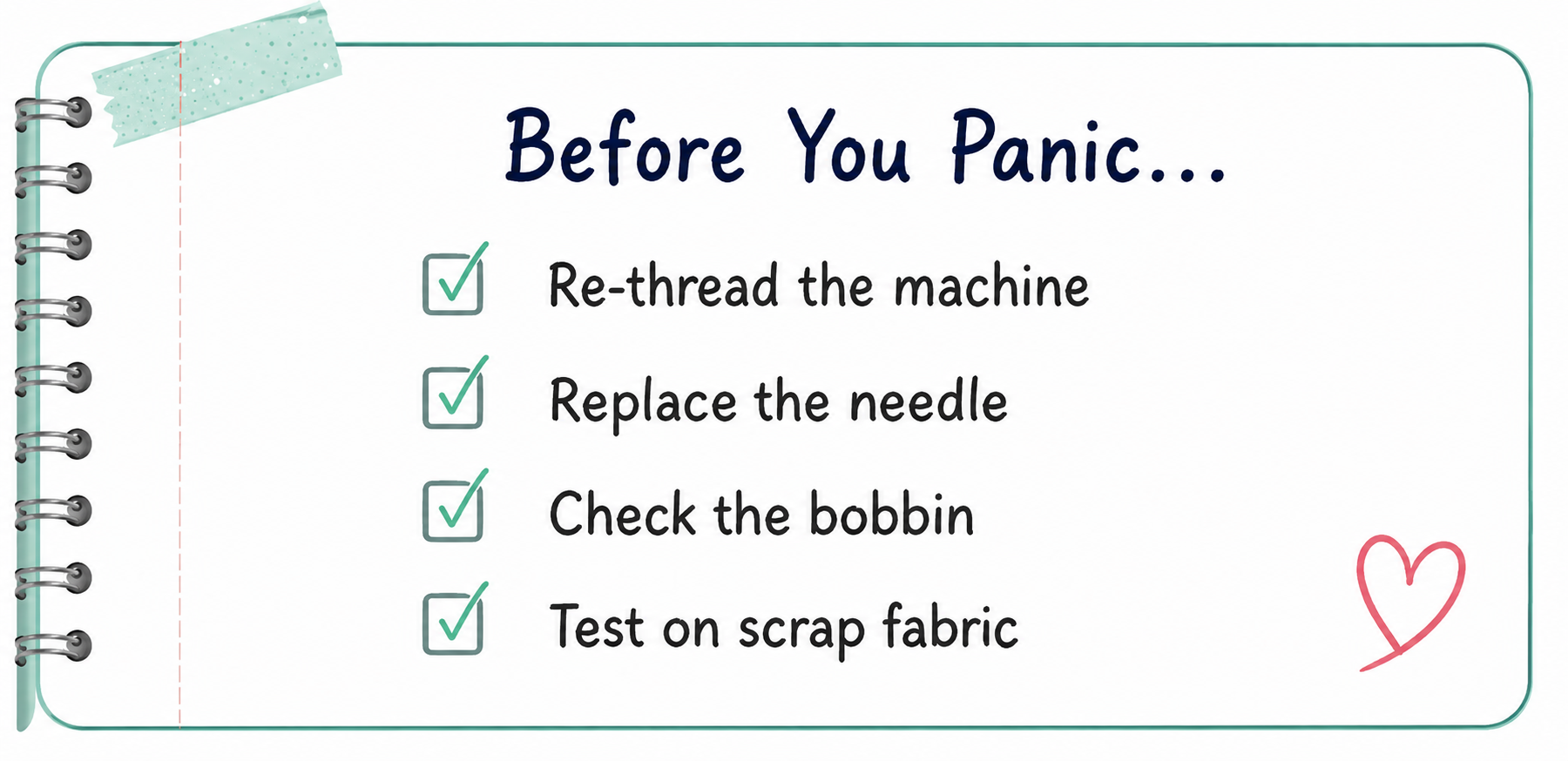

Happy sewing (and fixing!)
Affiliate Disclosure: This post contains affiliate links. If you purchase something through one of these links, Sew Cute Patterns may earn a small commission at no additional cost to you. As an Amazon Associate, I earn from qualifying purchases.
Shop Patterns | sewing tutorials | sewing blog | Shop sewing supplies